
PlantasticHaven Complete Care Guide
Who This Is For / Not For
you want a reliable way to decide when to water pothos, snake plants, monstera, philodendron, spider plants, succulents, and mixed indoor collections.
you need instructions for outdoor beds, hydroponics, orchids in specialist bark-only media, or commercial nursery drip systems.
Houseplant Watering Decision Guide
Identify your plant type and check its specific watering requirements below:
| Plant Group | Common Examples | Watering Threshold | Testing Method |
|---|---|---|---|
| Succulents & Cacti | Snake Plant, ZZ Plant, Aloe Vera, Echeveria | 100% dry soil column (top to bottom). | Skewer test comes up clean; pot feels exceptionally light. |
| Tropical Foliage | Pothos, Monstera, Philodendron, Spider Plant | Top 2–3 inches of soil completely dry. | Finger test or wooden skewer shows no damp soil cling in the top half. |
| Moisture Lovers | Boston Fern, Calathea, Peace Lily | Top 1 inch of soil dry (keep slightly damp but not swampy). | Water when the surface changes from dark to light brown. |
When This Advice Changes
Watering frequency is not a constant value. It shifts dynamically based on these parameters:
- Seasonal Logic: During winter, heating units dry out indoor air, but shorter days and weaker sunlight cause houseplants to slow their growth. Plants drink less, meaning watering frequency must be reduced by 30% to 50% compared to summer.
- Pot Material: Terracotta clay is highly porous, absorbing soil moisture and allowing it to breathe. Plants in terracotta dry out twice as fast as those in plastic, glazed ceramic, or metal pots, which seal moisture in.
- Soil Substrate Composition: Chunky soils amended with orchid bark, volcanic pumice, and perlite dry out quickly and provide excellent root aeration. Dense, peat-based standard potting mixes retain moisture for long periods and require longer dry-out intervals.
Step-by-Step Watering Method
- Identify the Plant: Confirm if it is a succulent, tropical foliage, or fern to set your target dry-out depth.
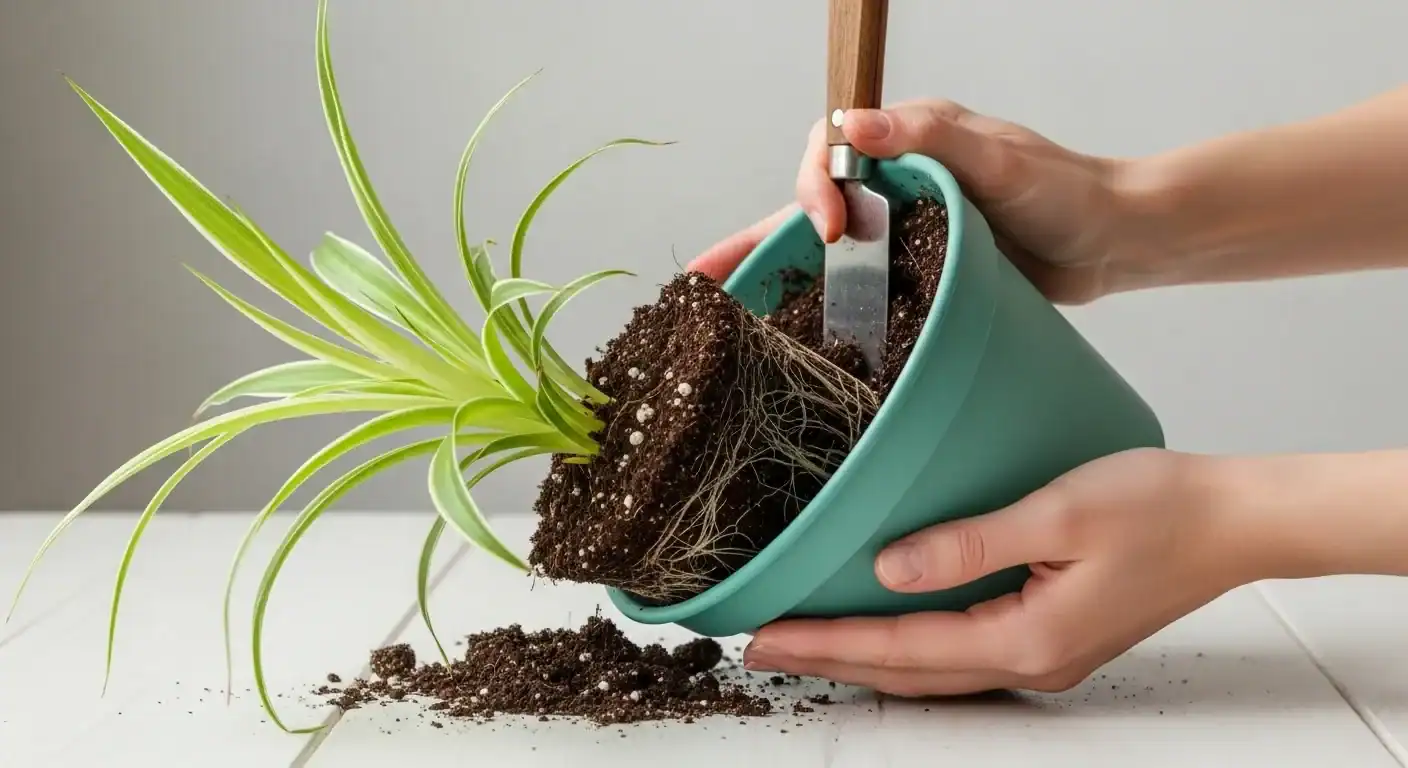
- Perform the Skewer Test: Insert a dry wooden skewer down to the bottom of the pot. Pull it out after 5 seconds. If dark soil clings or the wood is damp, wait.
- Lift the Pot: Learn to gauge pot weight. A dry pot feels surprisingly light compared to a freshly watered one.
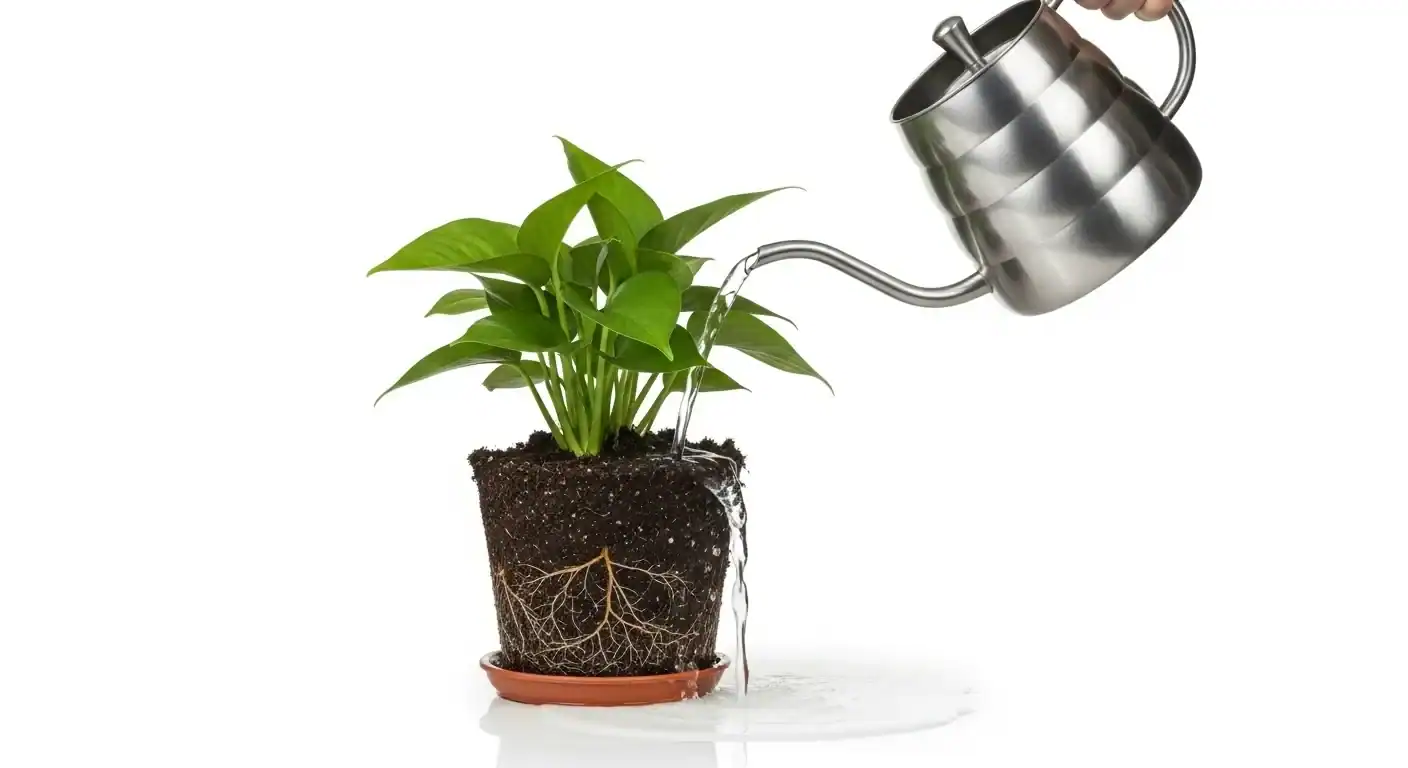
- Water Thoroughly: Pour water slowly over the soil until it exits the bottom drainage holes. Avoid splashing the leaves or crown.
- Empty the Runoff: Wait 15–20 minutes, then empty all standing water from the saucer or decorative cachepot to prevent root rot.
Cautions When Using Moisture Meters
Common Mistakes to Avoid
A plant wilts when its roots cannot absorb water. If the soil is already wet, wilting means root rot has destroyed the root system. Adding more water will drown the remaining roots.
Shallow watering wets only the topsoil. Deeper roots starve, and mineral salts accumulate near the surface. Always water thoroughly until it drains.
Allowing a pot to sit in a saucer full of runoff water blocks oxygen from entering the root zone, leading to rapid root suffocation.
Pots without bottom drainage holes trap water in a stagnant pool at the base. Repot into nursery containers with drainage holes immediately.
Helpful Watering Supplies
We recommend only essential tools to support your houseplant care routine:
Long-spout watering can
Allows precise water application directly to the soil surface without wetting leaves or crown joints.
View on Amazon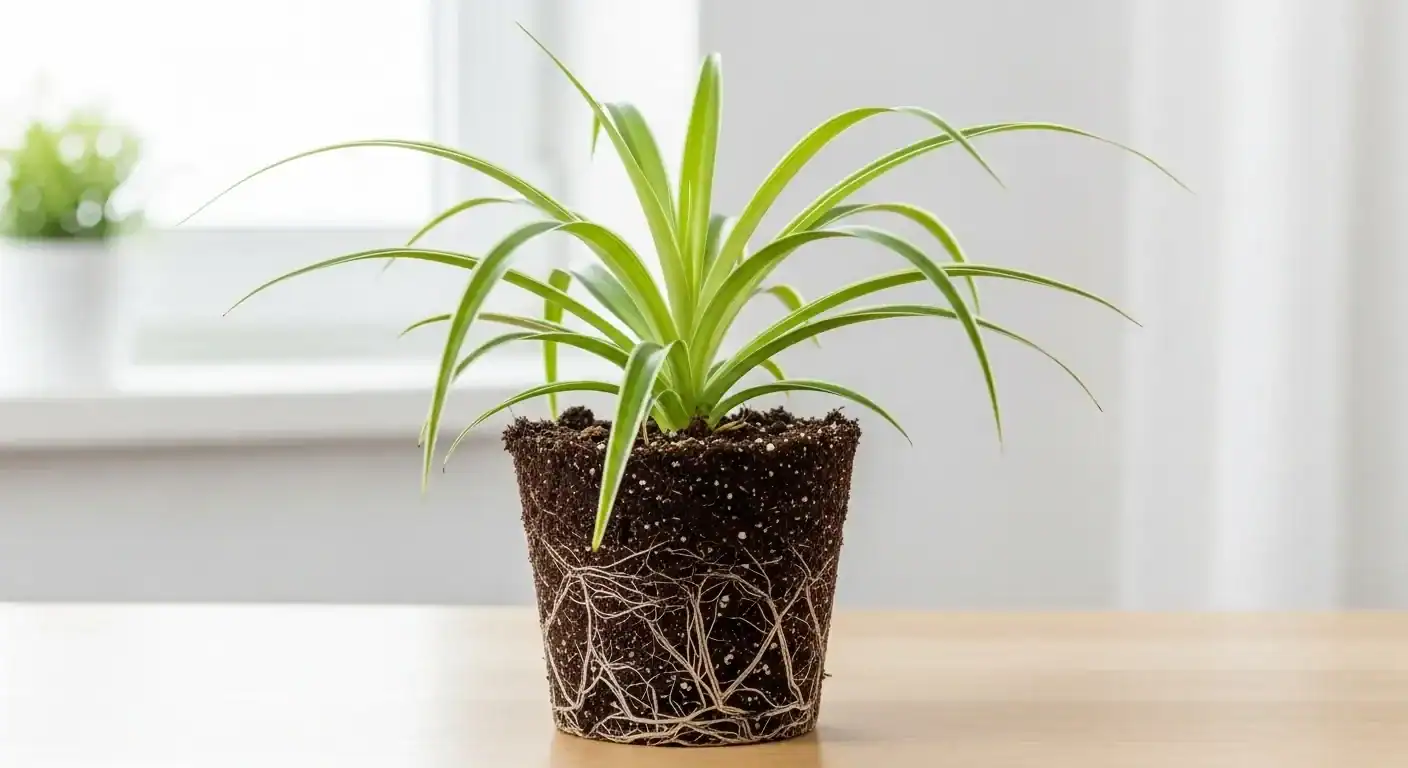
Nursery pots with drainage
Lightweight containers with extensive drainage, perfect for placing inside decorative cachepots.
View on Amazon
Terracotta drainage pots
Porous clay containers that let soil breathe and dry out evenly, reducing overwatering risks.
View on AmazonFrequently Asked Questions
How often should I water indoor plants?
Water only when the soil has dried to the level your plant prefers. This changes with the species, light levels, pot type, soil structure, and season.
Why are my plant leaves turning yellow?
Yellow leaves can result from both overwatering (soggy soil rotting roots) and underwatering (leaves dying of dehydration). Check the soil moisture deep inside the pot to diagnose.
Should I mist my indoor plants?
No. Misting does not hydrate the soil or roots. It can encourage fungal spots on leaves. Focus on correct soil watering instead.
Sources & Editorial Standards
This watering guide was reviewed for accuracy using cooperative horticultural research: