
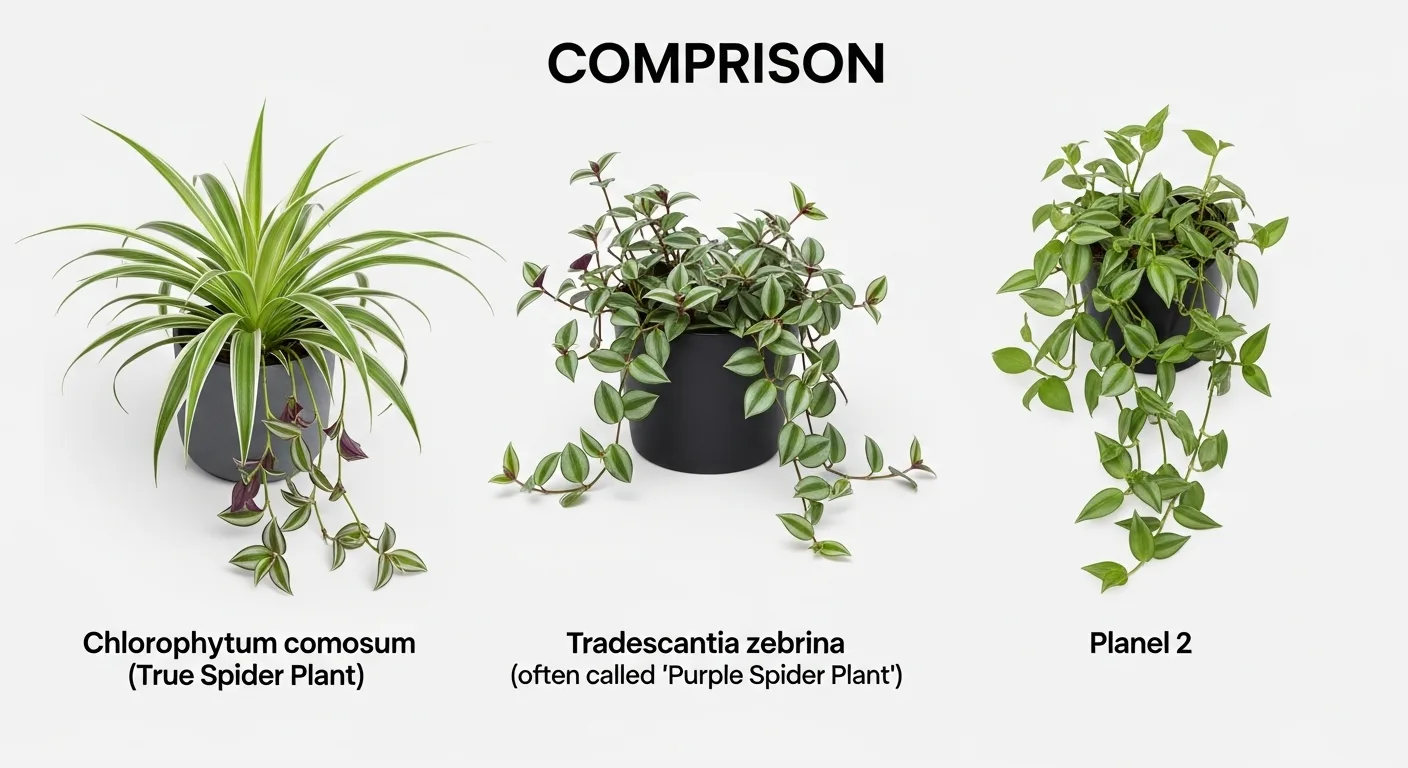
The best houseplants with purple leaves include Oxalis triangularis, Tradescantia zebrina, purple waffle plant, Persian shield, African violet, and some colorful calatheas or begonias. Most purple foliage needs bright indirect light to keep strong color. Low light often causes fading, weak growth, or green reversion, while harsh sun can scorch delicate leaves.
Purple houseplants are popular because they add color without relying on flowers, but they are not all cared for the same way. Some are easy trailing plants, some need humidity, some go dormant, and some are unsafe for pets. This guide helps you choose the right purple plant for your room.
What houseplants with purple leaves means
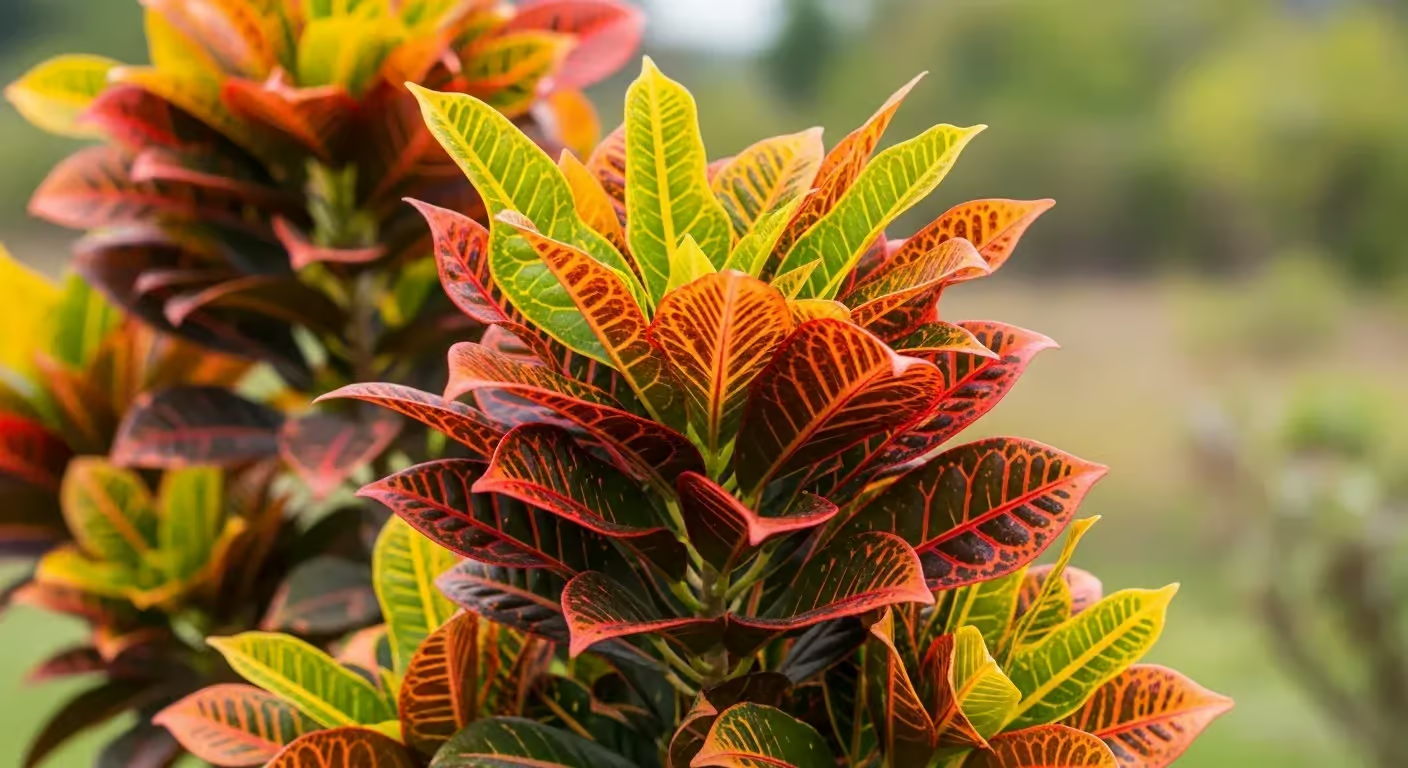
Houseplants with purple leaves are indoor plants grown primarily for purple, burgundy, violet, or purple-patterned foliage. Their color may come from natural pigments, variegation, leaf structure, or lighting response, so care must protect both plant health and color intensity.
Who this is for
- You want a complete, practical guide that works in a real home rather than a perfect greenhouse.
- You want clear decisions, examples, and internal plant-care links instead of vague advice.
- You want to prevent common mistakes before buying products or changing care.
Who this is not for
- Outdoor landscape plant care.
- Medical, veterinary, pesticide-label, or professional diagnostic advice.
- A plant in severe decline that needs immediate hands-on inspection.
The fast decision table
Use this table to make the first decision quickly, then read the detailed sections for the exceptions that matter in real rooms.
| Situation | Best choice | Why it works | Watch for |
|---|---|---|---|
| Easy trailing color | Tradescantia zebrina or Tradescantia pallida. | Fast growth and strong color in bright indirect light. | Leggy stems in low light. |
| Dramatic tabletop plant | Oxalis triangularis. | Distinct triangular purple leaves and seasonal rhythm. | Dormancy mistaken for death. |
| Humidity-loving texture | Purple waffle plant. | Colorful, crinkled foliage. | Crispy edges in dry rooms. |
| Bold bright color | Persian shield. | Intense metallic purple in bright conditions. | Fading in dim rooms. |
The practical framework
The framework below is designed to be simple enough for beginners and precise enough to help experienced plant owners diagnose the real cause of problems.
- Identify the condition: Name the plant, room, light level, pot type, and the symptom before changing anything.
- Separate cause from symptom: Do not treat every yellow leaf, brown tip, or slow week as the same problem.
- Choose the least dramatic fix: Change light, water, placement, or mix gradually unless rot, toxicity, or a heavy pest problem requires faster action.
- Track the response: Judge progress by new growth, root health, soil behavior, and repeated symptoms.
- Link the lesson: Use the related guides to solve the next specific question rather than crowding one article with every possible tangent.
- plant light requirements: Purple color often depends on enough usable light.
- pet-friendly houseplants: Check safety before bringing colorful plants into pet homes.
- best indoor plants: Compare colorful plants with easier green foliage choices.
- houseplant propagation station: Many purple trailing plants propagate well from cuttings.
Step-by-step instructions
Follow these steps in order so the plant gets a stable correction instead of a cycle of panic watering, moving, feeding, and repotting.
- Confirm the plant name when possible, because plant families can have different light, water, soil, and safety needs.
- Check the room before the plant: light, temperature, drafts, and distance from the window often explain the symptom.
- Check the pot: drainage, soil texture, root crowding, and cachepot water affect almost every indoor plant problem.
- Make one correction and leave the plant long enough to show new evidence.
- Record what changed so you can repeat success instead of guessing next month.
Examples by situation
These examples show how the advice changes by room, plant type, and owner behavior.
Bright shelf
Tradescantia, purple waffle plant, or Persian shield can show stronger color when light is bright but indirect.
Low-light corner
Choose a darker green tolerant plant instead, or add a grow light. Most purple foliage fades in weak light.
Pet household
Verify each species before buying and keep plants out of reach if safety is uncertain.
Beginner color plant
Tradescantia is often easier than humidity-demanding purple plants, but it still needs pruning and enough light.
Detailed guidance for real homes
If purple leaves fade green
Increase bright indirect light before adding fertilizer. Fading color often means the plant is not receiving enough energy to maintain strong pigmentation. Move gradually and avoid hot direct sun that scorches leaves.
If stems get long and bare
Trailing purple plants often need pruning. Take cuttings, root them, and replant them into the pot to keep it full. Better light reduces future stretching.
If Oxalis collapses suddenly
Oxalis may enter dormancy. Check the plant’s normal cycle before discarding it. Reduce watering while dormant and resume care when new growth appears.
If leaves crisp at the edges
Many colorful plants dislike dry air, inconsistent watering, or harsh sun. Check light first, then moisture rhythm and room humidity.
Complete care notes and practical details
Why purple plants need better light
Purple, pink, red, and patterned foliage often depends on strong but safe light. In dim rooms, plants may produce greener leaves or stretch toward the window. A grow light can help maintain color where natural light is weak.
Best purple plants for beginners
Tradescantia zebrina, Tradescantia pallida, and Oxalis triangularis are good starting points when light is adequate. They show clear signals and can often be propagated, which makes recovery easier after pruning or legginess.
Purple plants that need more attention
Purple waffle plant, Persian shield, calatheas, and begonias can be stunning, but they may need more consistent moisture, humidity, and light balance. They are better for owners who observe plants regularly.
How to style purple foliage indoors
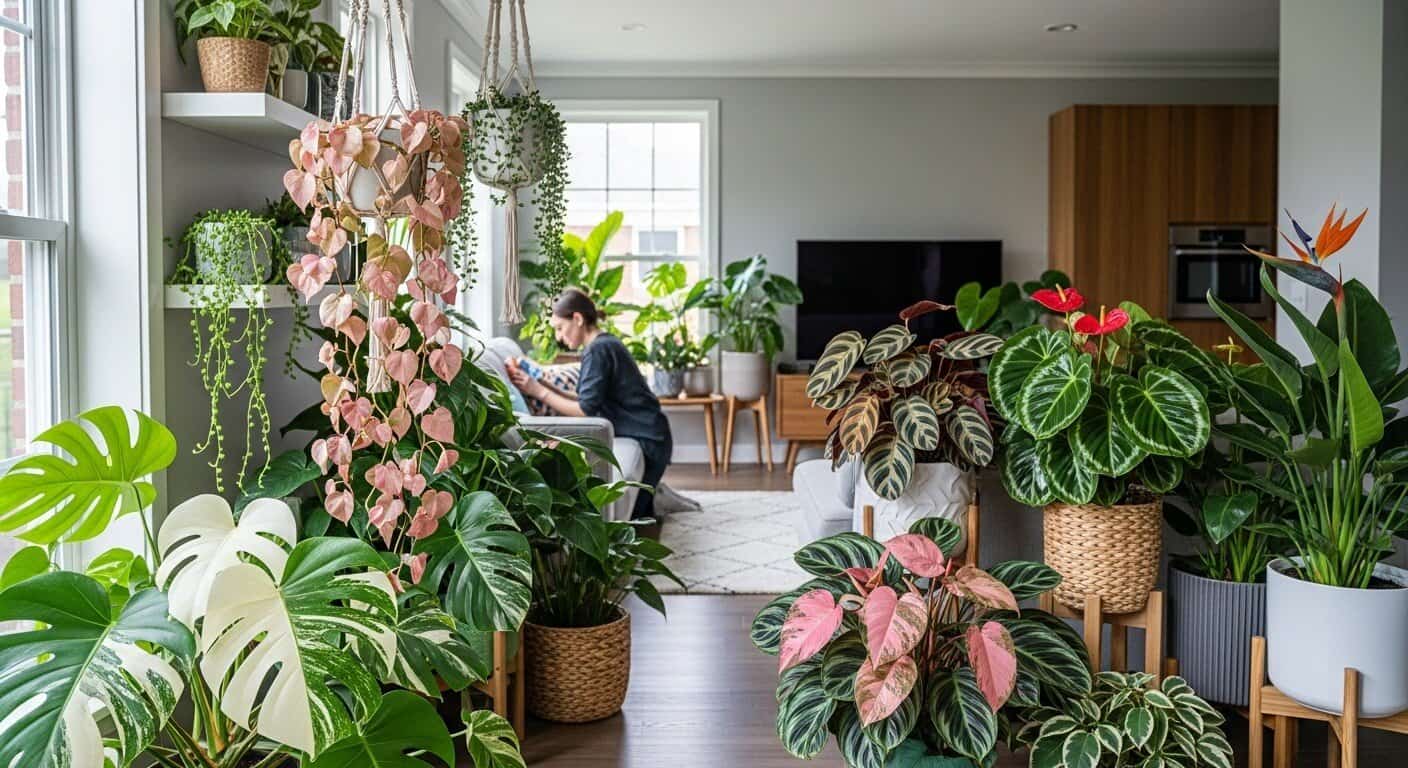
Use purple foliage as contrast against green plants, pale walls, or natural wood. Give the plant the light it needs first, then style around that. A plant placed only for color in a dark corner often loses the very color you bought it for.
Extra practical notes for better results
How to make this work in a busy home
The easiest way to keep this advice usable is to attach it to an existing habit. Check plants while making coffee, opening curtains, or tidying the room. Look for changes in new growth, leaf angle, soil dryness, and pest signs. Consistent short observations are more useful than a long rescue session after weeks of neglect. Indoor plants rarely need dramatic daily intervention; they need stable conditions and small corrections made at the right time.
How to read new growth
New growth tells the truth about current care. Old leaves may carry damage from shipping, store conditions, previous owners, or a past season. Judge the plant by whether new leaves are larger, smaller, paler, firmer, distorted, or spaced farther apart. When new growth improves, the care direction is probably right even if old leaves still look imperfect.
How room conditions change through the year
A room that works in spring may behave differently in winter or summer. Day length, sun angle, heating, air conditioning, humidity, and window temperature all change the plant’s water use and stress level. Recheck your assumptions each season instead of repeating the same routine all year. Seasonal adjustment is one of the biggest differences between surviving plants and plants that steadily improve.
How to avoid overcorrecting
Plant owners often see one symptom and make five changes. That makes it impossible to know what helped. Unless the plant is in immediate danger, change one major variable at a time. Move the plant, or adjust watering, or repot, or treat pests; do not do every fix on the same day. Stable recovery usually looks slow at first.
How to use internal plant notes
Write the plant name, location, last watering, repotting date, and any major changes. Notes reveal patterns that memory misses. You may discover that one room dries plants twice as quickly, that one pot lacks drainage, or that one species always slows down in winter. These notes make future care more precise without turning plant care into complicated work.
How to choose the next related guide
After you finish this page, choose the next guide based on the weakest variable. If light is uncertain, read the light guide. If water timing is uncertain, read the watering guide. If the plant is in a dense or old mix, read the soil or repotting guidance. If you see insects, inspect before treating. This sequence prevents random fixes and builds a complete care system.
How to judge success
Success is not a perfect plant with no old marks. Success is a plant that produces healthy new growth, dries at a predictable pace, holds leaves firmly, and shows fewer repeated symptoms. Indoor plants are living organisms, not decorations made of plastic. A few older leaves will age. A good routine keeps the plant moving in the right direction.
More real-world examples
Example 1: adjust slowly and observe clearly
In this situation, the best result comes from confirming the plant name, reading the room, and making one careful adjustment before adding products or changing the entire routine. The plant should be judged by new growth, root behavior, soil moisture, and repeated symptoms. This practical approach keeps care simple, reduces guesswork, and helps the reader apply the same principle to similar indoor plant problems.
Example 2: adjust slowly and observe clearly
In this situation, the best result comes from confirming the plant name, reading the room, and making one careful adjustment before adding products or changing the entire routine. The plant should be judged by new growth, root behavior, soil moisture, and repeated symptoms. This practical approach keeps care simple, reduces guesswork, and helps the reader apply the same principle to similar indoor plant problems.
Example 3: adjust slowly and observe clearly
In this situation, the best result comes from confirming the plant name, reading the room, and making one careful adjustment before adding products or changing the entire routine. The plant should be judged by new growth, root behavior, soil moisture, and repeated symptoms. This practical approach keeps care simple, reduces guesswork, and helps the reader apply the same principle to similar indoor plant problems.
Example 4: adjust slowly and observe clearly
In this situation, the best result comes from confirming the plant name, reading the room, and making one careful adjustment before adding products or changing the entire routine. The plant should be judged by new growth, root behavior, soil moisture, and repeated symptoms. This practical approach keeps care simple, reduces guesswork, and helps the reader apply the same principle to similar indoor plant problems.
Example 5: adjust slowly and observe clearly
In this situation, the best result comes from confirming the plant name, reading the room, and making one careful adjustment before adding products or changing the entire routine. The plant should be judged by new growth, root behavior, soil moisture, and repeated symptoms. This practical approach keeps care simple, reduces guesswork, and helps the reader apply the same principle to similar indoor plant problems.
Example 6: adjust slowly and observe clearly
In this situation, the best result comes from confirming the plant name, reading the room, and making one careful adjustment before adding products or changing the entire routine. The plant should be judged by new growth, root behavior, soil moisture, and repeated symptoms. This practical approach keeps care simple, reduces guesswork, and helps the reader apply the same principle to similar indoor plant problems.
Example 7: adjust slowly and observe clearly
In this situation, the best result comes from confirming the plant name, reading the room, and making one careful adjustment before adding products or changing the entire routine. The plant should be judged by new growth, root behavior, soil moisture, and repeated symptoms. This practical approach keeps care simple, reduces guesswork, and helps the reader apply the same principle to similar indoor plant problems.
Example 8: adjust slowly and observe clearly
In this situation, the best result comes from confirming the plant name, reading the room, and making one careful adjustment before adding products or changing the entire routine. The plant should be judged by new growth, root behavior, soil moisture, and repeated symptoms. This practical approach keeps care simple, reduces guesswork, and helps the reader apply the same principle to similar indoor plant problems.
Common mistakes and troubleshooting
The problems below are common because they look simple on the surface but usually involve more than one variable.
| Problem | What it usually means | What to do next |
|---|---|---|
| Putting purple foliage in low light | Color fades and growth weakens. | Use bright indirect light or a grow light. |
| Assuming all purple plants are pet-safe | Color says nothing about toxicity. | Verify the botanical name. |
| Ignoring dormancy | Some plants rest seasonally. | Adjust watering and wait for new growth. |
| Never pruning trailing plants | Stems become long and sparse. | Prune and propagate cuttings. |
Helpful tools and supplies
For purple plants, supplies are most useful when they support color and shape: grow lights for dim rooms, snips for pruning, and hanging planters for trailing varieties.
Grow light for colorful foliage
A grow light helps maintain purple foliage in rooms where natural light is too weak.
View relevant options on Amazon
Useful search terms: grow light colorful houseplants.
Small pruning snips
Clean snips make it easier to refresh leggy Tradescantia and take cuttings.
View relevant options on Amazon
Useful search terms: small plant pruning shears.
Hanging planter for trailing purple plants
A hanging planter shows off trailing purple foliage while keeping stems visible and airy.
View relevant options on Amazon
Useful search terms: hanging planter tradescantia.
Helpful video
This video adds helpful visual context for the main technique discussed in this guide.
FAQs
What houseplant has purple leaves?
Oxalis triangularis, Tradescantia zebrina, purple waffle plant, Persian shield, African violet, and some begonias or calatheas can have purple foliage.
Why is my purple plant turning green?
Low light is a common reason. Move the plant to brighter indirect light and check whether the species normally changes color with age or season.
Are purple houseplants easy to care for?
Some are easy, such as many Tradescantia varieties. Others need more humidity, steady moisture, and careful light.
Are purple houseplants safe for pets?
Safety depends on the exact species. Always verify the botanical name with a trusted toxicity resource.
Do purple plants need direct sun?
Most prefer bright indirect light. Some tolerate gentle direct sun, but harsh sun can scorch leaves.
Can I propagate purple houseplants?
Many trailing purple plants propagate well from stem cuttings with nodes. Oxalis usually spreads through bulbs or corm-like structures rather than ordinary stem cuttings.
Sources and editorial note
This guide was written for indoor plant owners and reviewed for practical accuracy using extension, safety, and plant-care references. Plant care varies by species, season, home temperature, light, potting mix, and drainage, so use the guidance as a decision framework rather than a rigid rule.
- University of Minnesota Extension: Lighting for indoor plants
- ASPCA: Toxic and non-toxic plants
- University of Missouri Extension: Caring for houseplants
Last reviewed: May 31, 2026. Publisher: PlantasticHaven.