
I still remember the first time I saw a mature variegated Monstera in person. The leaves looked hand-painted—splashed in cream and green like someone had dragged a brush across them on purpose. Then I looked at the price tag and immediately understood two things: variegated houseplants are gorgeous, and they can be unforgiving if you don’t know what you’re doing.
The good news is that not every variegated plant is expensive or difficult. Some are beginner-friendly, affordable, and far more stable than the social-media darlings people obsess over. Others are collectible, slower-growing, and best approached once you’ve nailed the basics.
This guide covers both. Below, you’ll find the best house plants with variegated leaves, what makes variegation special, how to keep it from fading, and the care mistakes that most often turn a beautiful plant back to plain green.
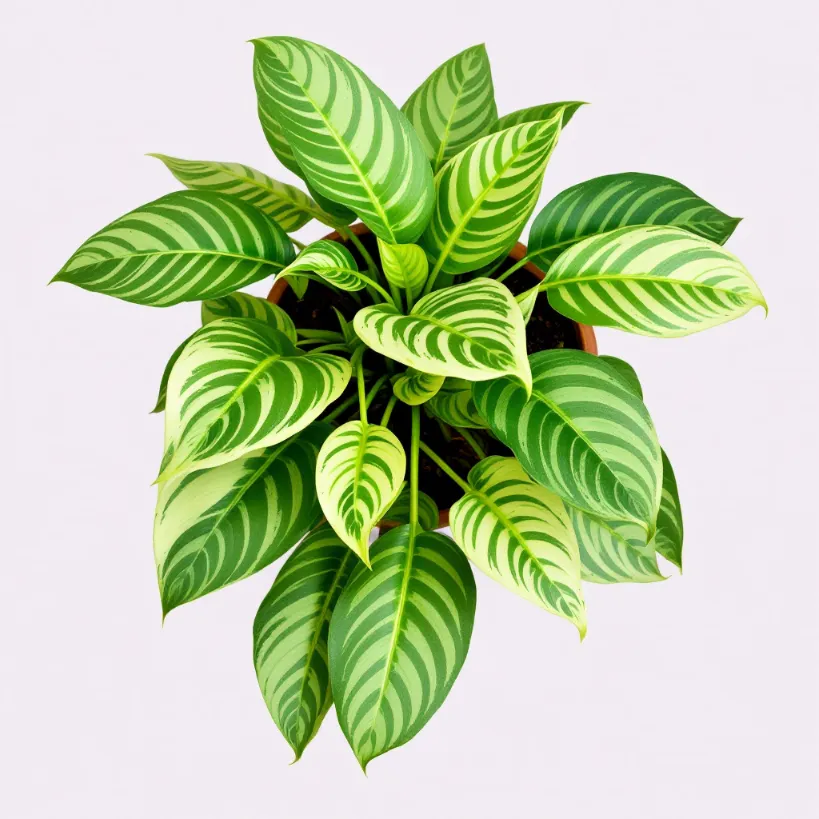
Quick Answer
Variegated houseplants have leaves with two or more colors because some parts of the leaf produce less chlorophyll than others. To keep variegation vivid, give these plants bright indirect light, avoid overwatering, use a chunky fast-draining soil mix, and prune any fully green reversions before they take over.
Key Takeaways
- Variegated plants usually need more light than their all-green counterparts.
- White, cream, and pink sections contain less chlorophyll, so these plants often grow more slowly.
- Low light encourages reversion, where new growth turns mostly or fully green.
- Stable types like Thai Constellation are easier to maintain than unstable chimeral types like Monstera Albo.
- Most do best in bright indirect light, airy soil, and pots that don’t stay wet for too long.
What Are Variegated Leaves?
Variegation means a leaf shows multiple colors instead of a uniform green. Depending on the plant, those colors may be white, cream, yellow, silver, lime, or pink.
That pattern can happen for several reasons:
- Chimeral variegation: Different cell lines exist in the same plant. Beautiful, but often unstable.
- Genetic variegation: Inherited patterns that are generally more predictable and stable.
- Reflective variegation: Silvery or satin-like markings that reflect light rather than lacking pigment.
- Viral variegation: Rare in houseplants and not something collectors usually want.
For indoor growers, the key practical point is simple: the paler the leaf, the less chlorophyll it has to power growth. That is why many variegated plants need stronger light and more careful care than plain green varieties.
Why Variegated Houseplants Need Different Care
Because variegated leaves have less chlorophyll, they photosynthesize less efficiently, usually grow more slowly, and are more likely to revert in poor conditions. White sections also scorch and brown more easily. That doesn’t mean they’re impossible. It just means they reward consistency more than neglect.
The 25 Best House Plants With Variegated Leaves
To make this more useful, I’ve split the list into three categories: easy and affordable, intermediate favorites, and rare or collectible choices.
Easy and Affordable Variegated Houseplants
- Marble Queen Pothos — a classic beginner choice with creamy marbled leaves, trailing growth, and reliable variegation in bright indirect light.
- N’Joy Pothos — more compact than Marble Queen, with sharper green-and-white contrast for shelves and small spaces.
- Pearls and Jade Pothos — elegant, slower-growing, and easy enough for most indoor growers.
- Golden Pothos — one of the easiest variegated plants to grow, with stable yellow variegation and vigorous growth. New growers often also compare pothos to heartleaf philodendrons, so this pothos vs philodendron guide helps clarify the difference.
- Spider Plant ‘Variegatum’ — dependable striped foliage and simple propagation from plantlets. If you want a similar striped look, compare it with the Zebra Spider Plant cultivar.
- Reverse Spider Plant — same easy-care nature with the opposite stripe pattern.
- Tradescantia ‘Tricolor’ — colorful, fast-growing, and easy to propagate, though it appreciates regular trimming.
- Peperomia obtusifolia Variegata — glossy, compact, and easier than many trendier variegated plants.
- Dieffenbachia ‘Camille’ — creamy-centered foliage and strong indoor performance when not overwatered.
- Aglaonema ‘Silver Bay’ — not pure white variegation, but one of the most forgiving patterned foliage plants for average homes.
Intermediate Variegated Houseplants
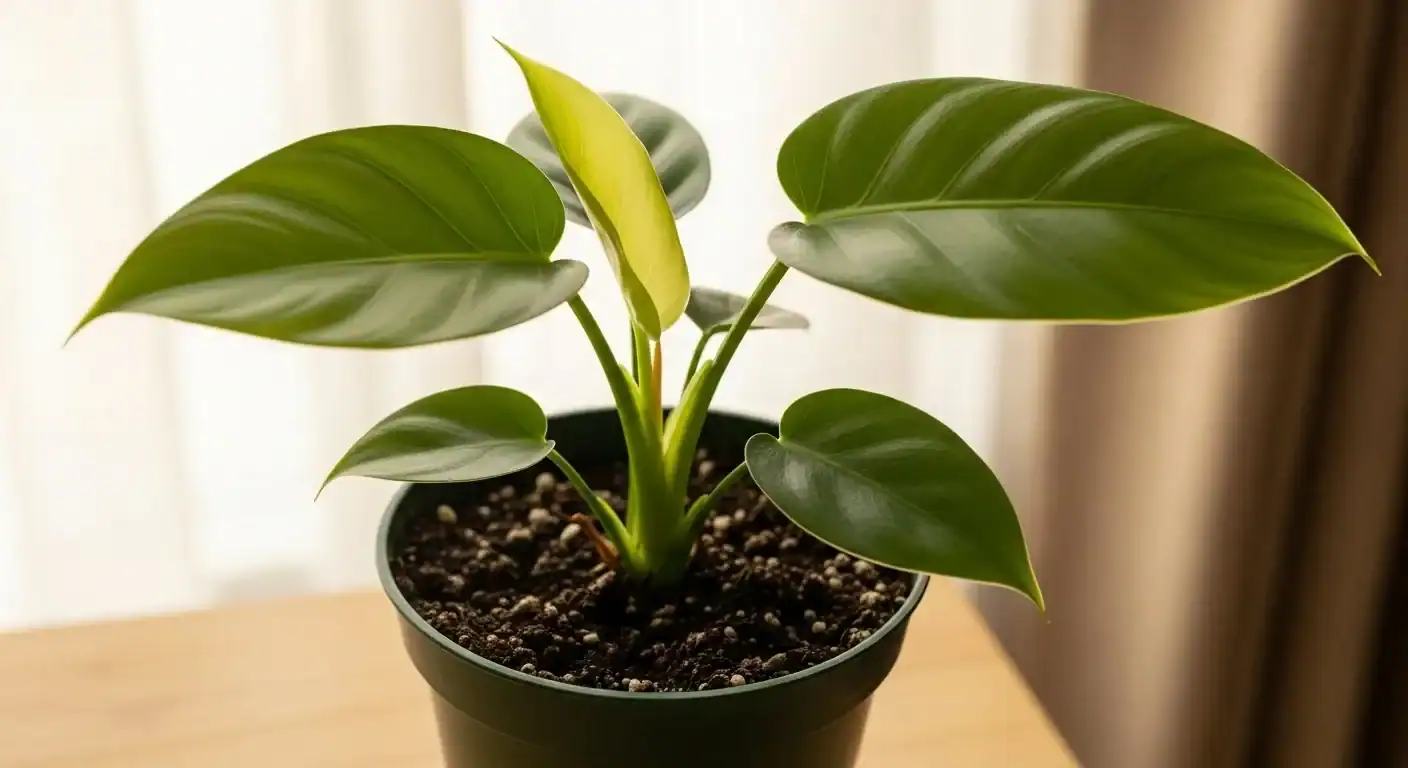
- Philodendron Birkin — stylish pinstriped variegation and manageable care, though mature growth can be inconsistent.
- Ficus elastica ‘Tineke’ — one of the best-looking variegated rubber plants, with green, cream, and soft blush tones.
- Ficus elastica ‘Ruby’ — similar to Tineke, but with stronger pink tones under bright light.
- Monstera deliciosa ‘Thai Constellation’ — premium, dramatic, and much more stable than Monstera Albo. If you are shopping by aesthetics, you may also want to read about houseplants with colorful foliage.
- Syngonium Albo Variegata — beautiful white marbling, attractive leaf shape, and good collector appeal.
- Syngonium Pink Splash — a good option for growers who want pink variegation without top-tier rarity prices.
- Calathea and Goeppertia cultivars — not all are true variegates, but many are grown for striking multi-toned foliage.
- Ctenanthe lubbersiana — painterly yellow-green variegation that works beautifully in bright indirect light.
Rare or Collectible Variegated Houseplants
- Monstera Albo Borsigiana — iconic white sectoral variegation, but more unstable and demanding than Thai Constellation.
- Philodendron White Princess — elegant and highly collectible with crisp white variegation.
- Philodendron White Wizard — broader leaves and cleaner white patterning, often slower-growing.
- Philodendron Pink Princess — still one of the most recognizable collector plants, but quality varies heavily by genetics.
- Monstera adansonii Variegata — stunning when mature, though slower and fussier than the green form.
- Variegated String of Hearts — delicate, beautiful, and excellent in very bright indirect light.
- Scindapsus pictus ‘Exotica’ — more reflective silver patterning than classic cream variegation, but absolutely worth growing.
Helpful Video: Variegated Houseplants Worth Growing and How to Choose Them
This video is useful if you want a quick visual comparison of several popular variegated houseplants before deciding which one fits your space and care style.
Best Variegated Houseplants by Skill Level
Best for beginners
- Marble Queen Pothos
- Golden Pothos
- Spider Plant
- Peperomia obtusifolia Variegata
- Aglaonema ‘Silver Bay’
Best for intermediate growers
- Philodendron Birkin
- Ficus ‘Tineke’
- Thai Constellation
- Syngonium Albo
- Ctenanthe lubbersiana
Best for collectors
- Monstera Albo
- Philodendron White Princess
- Pink Princess
- Variegated Monstera adansonii
- White Wizard
Best Variegated Houseplants by Light Level
Medium bright indirect light
- Spider Plant
- Aglaonema
- Dieffenbachia
- Peperomia Variegata
- Golden Pothos
Bright indirect light
- Marble Queen Pothos
- N’Joy Pothos
- Philodendron Birkin
- Ficus Tineke
- Syngonium Albo
Very bright indirect light
- Thai Constellation
- Monstera Albo
- Pink Princess
- White Princess
- Variegated String of Hearts
For deeper guidance, see our houseplant lighting guide.
How to Keep Variegation Bright Instead of Letting It Fade
1. Give enough light
Low light is the fastest route to dull color and greener new growth. Most variegated houseplants want bright indirect light near an east window or a few feet back from a bright south or west window behind a sheer curtain. If you need help judging exposure, use this houseplant lighting guide for indoor growers.
2. Don’t overwater
Wet roots weaken the plant and encourage poor-quality growth. Most variegated plants want the soil to partly dry between waterings.
3. Use an airy soil mix
A solid all-purpose chunky mix for many indoor variegates is 40% quality potting mix, 25% orchid bark, 25% perlite or pumice, and 10% worm castings or charcoal.
4. Prune green reversions early
If a stem starts producing fully green leaves on an unstable variegated plant, prune it back to a node with better patterning before that greener growth takes over.
5. Fertilize lightly but consistently
A gentle balanced fertilizer at half strength during active growth is usually enough. Overfeeding often pushes greener growth.
6. Protect pale areas
White and cream sections brown more easily from direct sun, underwatering, fertilizer burn, and dry air. If pale areas crisp repeatedly, look at light intensity, salts, and watering consistency before assuming humidity is the only issue.
Stable vs Unstable Variegation: Why It Matters Before You Buy
More stable examples
- Thai Constellation
- many pothos cultivars
- spider plants
- many peperomias
Less stable examples
- Monstera Albo
- Philodendron White Princess
- Pink Princess
- some Syngonium Albo plants
This matters because unstable plants can produce all-green leaves, all-white leaves, or inconsistent growth. All-white growth may look dramatic, but it usually weakens the plant long-term because those leaves cannot support enough photosynthesis.
Common Problems With Variegated Houseplants
- Reversion to green: Usually caused by low light, genetics, or delayed pruning.
- Browning on white sections: Often caused by low humidity, mineral buildup, direct sun, or inconsistent watering.
- Slow growth: Normal to a point, since variegated plants often photosynthesize less efficiently.
- Root rot: Usually caused by watering on a schedule instead of checking the soil.
- Leggy growth: Most often a light problem.
- Pests on tender new leaves: Variegated plants are not immune, so keep an eye on common issues and use this organic pest control for houseplants guide if you spot mites or mealybugs.
Propagating Variegated Houseplants
You can propagate many variegated houseplants from stem cuttings, but with unstable chimeral plants, node choice matters. Not every cutting will preserve strong variegation.
- Use stem cuttings in water for pothos and Tradescantia.
- Use sphagnum moss or perlite boxes for expensive aroid cuttings.
- Use division for spider plants and some clumping varieties.
When buying a cutting, don’t just look at the leaf. Look at the node and stem patterning too. If you plan to root cuttings yourself, these philodendron propagation tips and tricks are worth reviewing first. A beautiful leaf attached to a poor node may not continue that pattern in future growth.
How to Buy Variegated Plants Without Getting Burned
- Check whether the variegation is stable or chimeral.
- Look for healthy stem patterning, not just one pretty leaf.
- Ask whether the plant is established or freshly rooted.
- Request current natural-light photos.
- For expensive plants, ask for close-ups of the node and active growth point.
Frequently Asked Questions
Why are variegated houseplants more expensive?
They usually grow more slowly, are harder to propagate consistently, and stay in higher demand than standard green forms.
Do variegated plants always need more light?
In most cases, yes. They usually need brighter indirect light than their all-green counterparts because less of the leaf can photosynthesize.
Can variegation come back after it fades?
Sometimes. If fading was caused by poor light, improving conditions may help future leaves show better color, but genetics still set the ceiling.
Is Monstera Albo or Thai Constellation easier?
Thai Constellation is generally easier because the variegation is more stable.
Should I cut off all-white leaves?
Not always immediately, but if a plant keeps producing all-white growth with no usable green tissue, pruning back to a healthier node is usually the safer move.
Variegated plants also double as design elements, especially in bright living rooms, offices, and entryways. If you want the decorative side too, these houseplant styling tips for indoor spaces are a useful companion read.
Final Thoughts
The best variegated houseplant is not always the rarest or most expensive one. It’s the one that fits your home, your light, and your patience level.
If you want something easy, start with pothos, spider plant, or peperomia. If your goal is improving a workspace too, these best houseplants for office spaces are another smart place to browse. If you want a premium statement plant without maximum drama, Thai Constellation is often the smarter buy than Monstera Albo. And if you want collector-level foliage, go in with your eyes open: variegation is beautiful, but it is not always stable.
Get the care right, though, and few indoor plants are more rewarding.
📚 References & Further Reading
- University of Minnesota Extension — Houseplant basics and indoor growing conditions
- Royal Horticultural Society — Houseplant growing advice
- Clemson Cooperative Extension — Indoor plant care fundamentals
- UC IPM — Plant problem diagnosis and care references
For practical follow-up reading on this site, see our guides to pothos care, Monstera care, and rare houseplants for collectors.