
Quick Answer
- Group plants in odd numbers (3-5) for visual balance
- Layer heights: tall → medium → trailing at eye level
- Match pot colors to wall tones, not floor tones
- Use negative space; don’t crowd shelves
- Rotate plants weekly for even growth
Why Houseplant Styling Matters
Most people treat plants like afterthoughts. They buy them, toss them in a corner, and wonder why their space still feels flat. The reality: plants are furniture. Style them like you would a sofa—intentionally.
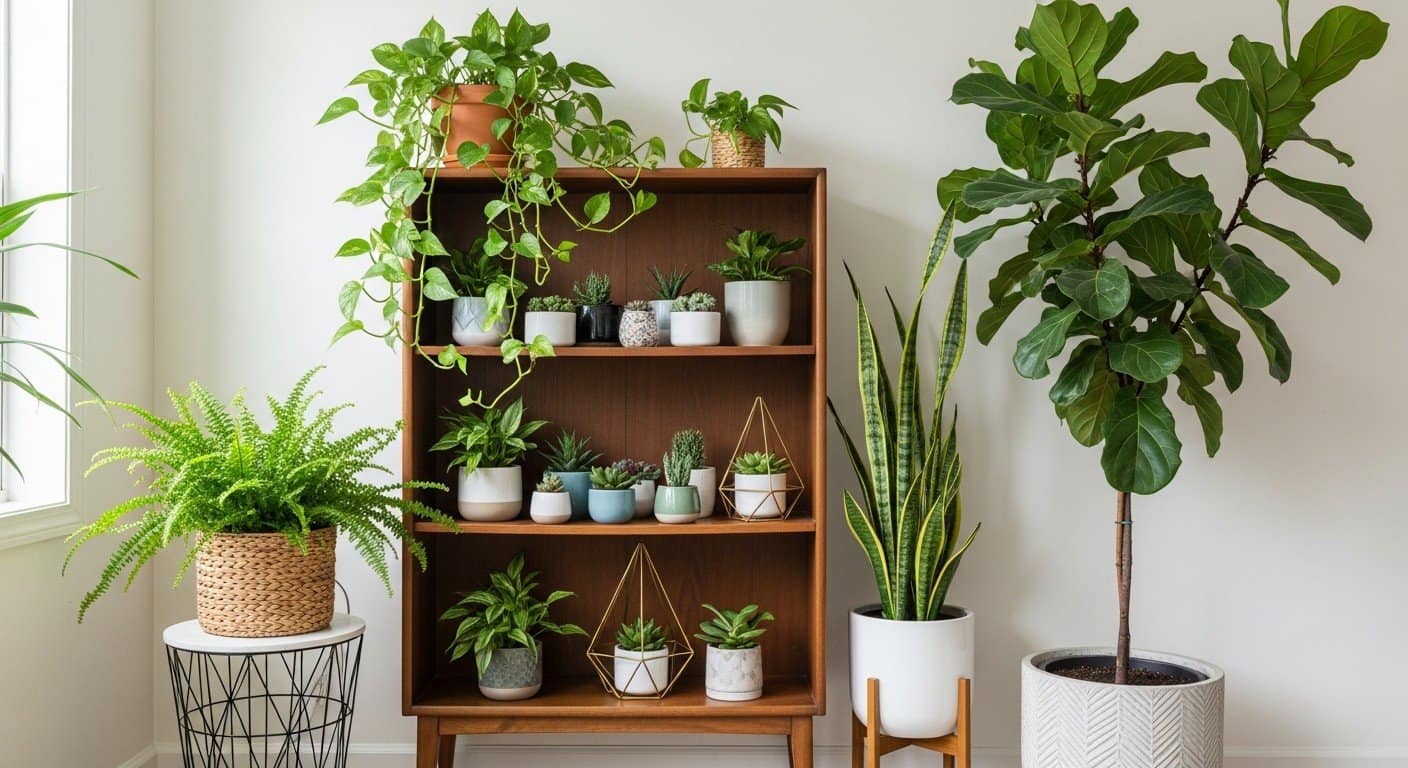
Done right, plants add height, texture, and color. They hide ugly corners, frame views, and even make ceilings look taller. Done wrong, they clutter surfaces and turn into crispy distractions.
Rule #1: Think in Threes
The human eye loves odd numbers. Three plants on a console beats two every time. Five on a bookshelf beats four. Try it: snap a photo of your current setup, then add one more pot. The difference is instant.
The Power Triangle Method
Imagine a triangle on your surface. Place one plant at each point. Vary the heights: tall, medium, trailing. This simple trick turns a random cluster into a deliberate vignette.
Rule #2: Height Before Color
Beginners obsess over leaf color. Pros obsess over height. A 6-foot Monstera next to a 12-inch Pothos creates instant drama. Flip the order and you get a kindergarten windowsill.
| Plant | Height Range | Best Use |
|---|---|---|
| Fiddle Leaf Fig | 5-7 ft | Corner filler, vertical anchor |
| Philodendron ‘Birkin’ | 1-2 ft | Mantel accent |
| String of Pearls | Trailing | High shelf spill |
Rule #3: Pots Are Part of the Palette
Pick pots that repeat your wall color, not your floor. The eye reads the room top-down. A terracotta pot on a beige tile disappears. A terracotta pot against sage paint pops.
Matte finishes read modern. Glossy reads traditional. Concrete reads industrial. Match the pot finish to your light fixtures for cohesion.
How to Style Plants in a Small Apartment
Floor space is expensive real estate. Go vertical. Use a DIY macrame hanger to suspend a plant from the ceiling. You gain greenery without sacrificing square footage.
Stick to one color family—say, all white pots—to avoid visual clutter. Mirrors behind plants double their impact and bounce light around.
Micro-Space Cheat Sheet
- Window ledge: trailing Philodendron Brasil
- Fridge top: compact ZZ Raven
- Shower shelf: humidity-loving ferns
Mistake #1: The Mall Food Court Look
Too many plant species in one spot feels like a cafeteria sampler. Pick a star plant, then choose supporting actors that share a color or texture. Example: a large Snake Plant (star) plus three compact Sansevieria ‘Moonshine’ (supporting cast).
Mistake #2: The 360-Degree Plant
Placed in the middle of the room, a plant forces you to stare at its plastic pot. Instead, put a plant against a wall or in a corner so the backside disappears and the foliage faces the viewer.
Creating Plant Corners That Actually Work
Designate a corner, not a random spot. Put the tallest plant in back, medium in middle, and trailing in front. Add a floor lamp behind the tallest plant so the leaves glow at night.
Repeat the same pot color throughout the corner. This tricks the eye into seeing the cluster as a single unit, not scattered clutter.
Lighting Hack
North-facing corner? Use a low-light Aglaonema. South-facing? Try a Ponytail Palm. Match the plant to the light, not the other way around.
Mixing Textures Without Chaos
Think: shiny vs. matte, wide vs. narrow, round vs. sword-shaped. A shiny Monstera leaf next to a matte Calathea creates instant contrast without adding color.
Stick to three textures max per room. Anything more looks like a plant expo.
Bohemian vs. Minimalist Plant Aesthetics
| Style | Key Plants | Accessories |
|---|---|---|
| Bohemian | Rhipsalis, trailing Pothos, large Palms | Macrame, colorful rugs, woven baskets |
| Minimalist | Snake Plant, ZZ, single Fiddle Leaf | White pots, concrete planters, clear surfaces |
Choose one aesthetic per room. Mixing macrame with stark concrete is like wearing flip-flops with a tuxedo.
Using Plants as Living Art
Mount a propagation station on a blank wall. The glass tubes create a living gallery. Swap out cuttings seasonally for free decor updates.
Anthuriums bloom for months—cheaper than buying fresh flowers weekly.
How to Style Plants on Shelves
It’s not Tetris. Leave 40% of the shelf empty so the eye can rest. Put the tallest plant on the left and let the height drop toward the right. This creates a visual slope that guides the viewer across the display.
Shelf Checklist
- Odd number of pots
- Graduated heights
- At least one trailing plant
4. Pot colors echo wall paint
Large Plants in Small Spaces
One big plant > five small plants. A 5 ft Rubber Tree in a single statement pot eats up zero floor space but gives a studio apartment the presence of a small tree. Place it in a corner at a 45° angle to the sofa. The diagonal line elongates the room.
The 5-Minute Refresh
Rotate each plant a quarter turn. This evens out growth and keeps the front side lush. While you’re at it, dust leaves with a microfiber cloth and remove any dead foliage. Instant facelift.
When to Repot for Aesthetic Reasons
Roots poking out the top? That means the plant is outgrowing the pot, and the soil is likely too compact to hold on to water. A pot 2 inches wider in diameter, as our pot selection guide shows, makes the whole composition look more intentional.
How to Choose the Right Pot Size
Proportions matter. The pot height should be 1/3 of the plant’s total height. A 6-foot plant in a 12-inch pot looks like it’s going to tumble over. A 2-foot plant in a 12-inch pot looks like a sculpture on a pedestal.
Styling with Pets in the house
Keep plants beyond a cat’s tail range. Use a pet-safe neem spray to deter chewing. Choose non-toxic varieties like Spider Plant, Boston Fern, and Calathea.
Styling Around Existing Furniture
Plant color should complement upholstery. Gray sofa? Silver Pothos or a Peperomia ‘Ripple’. Brown leather? Burgundy Rubber Tree or Philodendron ‘Birkin’. The leaf becomes the accent pillow.
Final Checklist
- Odd numbers win
- Heights create drama
- Pots echo wall color
- Leave 40% negative space
- Rotate weekly
Frequently Asked Questions
What is the hardest houseplant to take care of?
Maidenhair Fern. It needs constant humidity, filtered light, and distilled water. One missed watering and it collapses into a crispy ball.
Should you cut the brown tips off indoor plants?
Yes, but use a micro-tip scissors and cut to the leaf edge, not straight across. Brown tips are dead tissue; removing them prevents further damage and keeps the plant looking clean.
References
- How I Style My Houseplants Creating an Indoor Oasis – YouTube
- Indoor Plant Care: Ultimate Guide for Thriving … – PlantasticHaven
- More PLANT STYLING tips!! #houseplants #styling … – YouTube
- Amazing Plant Styling TIPS + TRICKS To Jungle-fy Your Home
- Plantastichaven.com – Facebook
- Guide to Houseplants— Notes on Plant Styling – YouTube
- Indoor Plant Design Tips | How to Style Houseplants – HGTV
- Ideas and tips for styling houseplants – YouTube