
By Alexios Papaioannou · Plantastic Haven · Last reviewed 2026-06-26
Philodendron Mayoi is a tropical aroid grown for deeply lobed, palm-like green leaves. Give it bright indirect light, a chunky philodendron soil mix, water after the upper mix partly dries, and a moss pole or support as it matures. Keep it warm, avoid soggy roots, and expect larger leaves when light and climbing support improve.
Who this is for / not for
Who this is for
- You bought Philodendron Mayoi and want a complete indoor care routine.
- You need help with small leaves, no lobes, yellowing, drooping, or a sprawling vine.
- You want soil, support, propagation, and troubleshooting in one place.
Who this is not for
- You need outdoor tropical landscape instructions for frost-free climates.
- You want care for a different palm-leaf philodendron without confirming the plant ID.
Clear definition
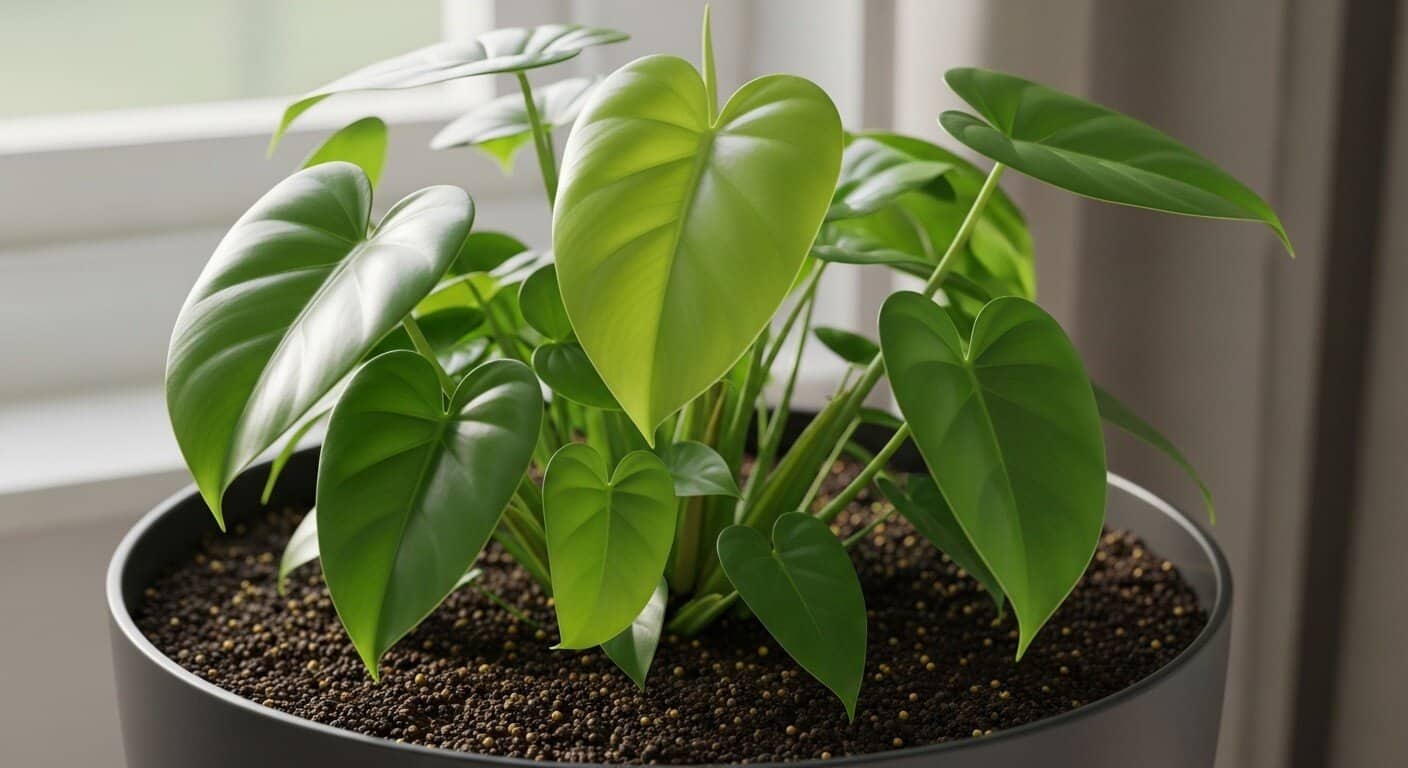
Philodendron Mayoi is a climbing philodendron valued for narrow, lobed leaves that can resemble small palm fronds. Indoors, it behaves like a tropical aroid: it wants warmth, bright filtered light, an airy potting mix, and something to climb so leaves can size up as the plant matures.
Philodendron Mayoi care chart
Use this as the baseline care plan, then adjust for your home light, pot material, and season.
| Care factor | Best target | Why it matters |
|---|---|---|
| Light | Bright indirect light; avoid harsh midday sun | Supports lobing, compact growth, and stronger leaves. |
| Water | Water when upper 1-2 inches partly dry | Prevents both wilt and soggy root stress. |
| Soil | Chunky aroid mix with bark and perlite or pumice | Keeps roots oxygenated. |
| Temperature | Warm indoor range; protect below about 60°F | Cold stress causes droop, spotting, and root issues. |
| Humidity | Average to higher indoor humidity | Helps leaf expansion but does not replace watering. |
| Support | Moss pole, plank, or trellis | Encourages larger, more mature foliage. |
| Fertilizer | Light feeding during active growth | Supports growth only when light and roots are healthy. |
| Pet safety | Keep away from pets and children who chew plants | Philodendrons contain irritating calcium oxalate crystals. |
The Mayoi maturity framework
Philodendron Mayoi often looks underwhelming when it is treated like a trailing vine in low light. Mature-looking leaves come from the right combination of light, roots, and support.
Light drives leaf size. Dim rooms produce smaller, simpler leaves.
Roots drive stability. Dense soil causes droop, yellowing, and slow growth.
Support drives maturity. Climbing stems tend to produce larger leaves than unsupported trailing stems.
Warmth drives recovery. Cold and wet conditions slow root function.
Care chart
| Problem | Likely cause | Fix | When to expect change |
|---|---|---|---|
| Small leaves | Low light or no support | Move to brighter indirect light and add a pole | New leaves improve first; old leaves stay same. |
| Yellow lower leaves | Overwatering, old leaves, or low light | Check soil, drainage, and root health | 1-4 weeks after care correction. |
| Drooping after watering | Dense mix or root stress | Check root ball and use chunkier mix if needed | Several days to weeks. |
| Crispy edges | Dry swings, direct sun, or low humidity | Stabilize watering and move out of harsh sun | New growth should be cleaner. |
| Long bare stem | Low light or no pruning | Prune and propagate nodes; improve light | New shoots after node activation. |
How to grow Philodendron Mayoi indoors
- Place the plant in bright indirect light where it can see the sky but avoids harsh midday sun.
- Use a pot with drainage and a chunky mix: 2 parts indoor potting mix, 1 part orchid bark, 1 part perlite or pumice.
- Water thoroughly, then let the upper mix partly dry before watering again. Do not keep the saucer full.
- Install a moss pole, plank, or trellis early so stems attach before they become long and floppy.
- Rotate the pot monthly so growth stays balanced and all leaves receive light.
- Wipe leaves gently to keep dust from blocking light.
- Feed lightly during active growth only after the plant is stable and producing new leaves.
- Propagate with stem cuttings that include at least one node; keep warm and humid while rooting.
- Keep it away from cold windows, AC vents, and chewing pets.
Examples by situation
- If your Mayoi has long stems with small leaves, the first upgrade is brighter indirect light plus a support pole.
- If new leaves open pale and thin, check root health and light before adding fertilizer.
- If the soil stays wet for a week, repot into a chunkier mix and use a smaller pot if the root system is modest.
- If the plant was shipped cold, stabilize temperature and light before repotting or feeding.
Helpful tools and supplies
Video Care & Identification Guide
To help you visualize key care rules, propagation steps, and identification tips, watch this detailed expert walkthrough video.
Common mistakes and troubleshooting
| Mistake | Why it hurts | Better fix |
|---|---|---|
| Growing it in dense all-purpose soil | Roots lose oxygen and leaves yellow or droop. | Use a chunky philodendron mix. |
| Skipping support | The plant trails and produces smaller foliage. | Add a pole, plank, or trellis while stems are flexible. |
| Using direct sun to force growth | Leaves scorch or bleach. | Use bright filtered light instead. |
| Fertilizing a stressed plant | Stress worsens when roots or light are poor. | Fix environment before feeding. |
Related PlantasticHaven guides
Use these sibling guides to move between identification, care, soil, temperature, and room-light decisions without guessing.
FAQ
Is Philodendron Mayoi rare?
It is less common than heartleaf philodendron but increasingly available through houseplant sellers. Availability changes by market, so buy from reputable growers.
Does Philodendron Mayoi need a moss pole?
It can grow without one, but support encourages a more mature climbing habit and can help leaves size up.
Why are my Philodendron Mayoi leaves small?
Small leaves usually come from low light, no support, weak roots, or immature growth. Improve light and climbing support first.
How often should I water Philodendron Mayoi?
Water when the upper mix partly dries. The exact timing depends on light, pot size, soil, temperature, and season.
Is Philodendron Mayoi toxic to cats?
Philodendrons contain calcium oxalate crystals and should be kept away from cats, dogs, and children who may chew leaves.
Sources and editorial note
This guide was reviewed for practical indoor houseplant care accuracy on 2026-06-26. Recommendations prioritize observable plant symptoms, drainage, light, temperature, pet safety, and university or veterinary reference sources over unsupported social-media claims.