
Quick answer • Updated April 29, 2026
Philodendron light requirements: bright, indirect, consistent
| Philodendron type | Light need | Placement cue |
|---|---|---|
| Green heartleaf types | Low to bright indirect | Good for slightly dimmer rooms |
| Variegated types | Bright indirect | Need more light to hold pattern |
| Large-leaf climbers | Medium to bright indirect | Support plus side light helps shape |
Signs your light level is wrong
- Leggy stems and small leaves usually mean too little light.
- Brown crispy patches can mean too much direct sun.
- Slow drying soil can mean the plant is too dark and using less water.
FAQ
Where should I put a philodendron? Near an east window or several feet back from a brighter south or west window.
Do grow lights work? Yes, if they provide consistent light without overheating the leaves.
If your philodendron is stretching, leaning, fading, or refusing to size up, light is the first thing to check. Most philodendron problems that look like watering issues, fertilizer issues, or “bad luck” are really placement problems. Get the light right, and everything else gets easier to manage.
This guide explains what philodendron light requirements actually look like in a real home, how to tell if your plant is getting too little or too much light, and how to adjust placement without the plant. It also shows when to use the broader houseplant lighting guide and when a philodendron-specific adjustment matters more.
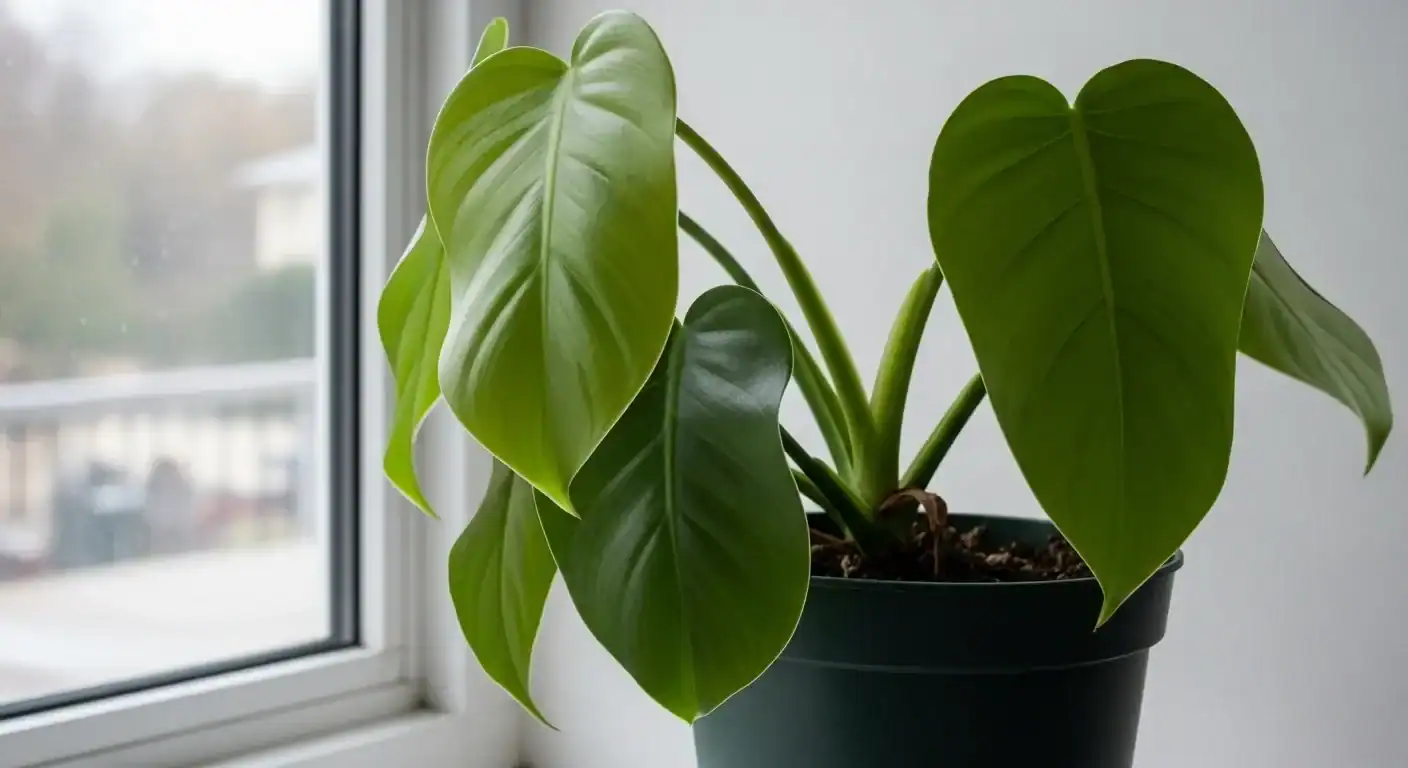
Quick answer: what light do philodendrons need?
Most philodendrons grow best in bright indirect light. That usually means a spot near an east-facing window, a few feet back from a bright south-facing window, or near a west-facing window with filtered light. They can survive in lower light, but growth slows, stems stretch, and leaves often get smaller over time.
- Best overall: bright indirect light for steady, compact growth
- Tolerable but not ideal: medium light with slower growth
- Risky: harsh direct afternoon sun on tender leaves
- Useful fallback: grow lights in darker rooms or winter
Why light matters so much for philodendrons
Philodendrons are forgiving plants, but that reputation hides a common problem: they can survive in poor light for a long time while looking progressively worse. A philodendron in weak light may stay alive, but it often becomes leggy, sparse, pale, or floppy. If your goal is a plant that looks full, healthy, and intentional, light has to be taken seriously.
Better light also makes the rest of care easier. Water evaporates more predictably, new leaves size up better, support systems work better on climbing types, and recovery from pruning or repotting is smoother.
What bright indirect light means for philodendrons
Bright indirect light means your plant gets plenty of usable light without sitting in harsh direct sun for long stretches. In practice, that often looks like this:
- next to an east-facing window with gentle morning sun
- close to a bright south-facing window, but softened by distance or a sheer curtain
- near a west-facing window if the hottest rays are filtered
- in a bright room where the plant is still close enough to the main light source to grow compactly
If a philodendron is across the room from a window, it is often getting far less light than people think. That is why broad labels like “bright room” are not enough. If you need a room-level lighting baseline first, use this houseplant lighting guide to judge the whole space more accurately.
Best window direction for philodendrons
East-facing windows
Usually the easiest option. Morning sun is gentler, and many philodendrons respond well to it without stress.
South-facing windows
Often excellent if the plant is not pressed directly against hot glass all day. Distance matters here.
West-facing windows
Can work well, but afternoon light is stronger and may need filtering for softer-leaved varieties.
North-facing windows
Usually safe but weaker. Some philodendrons tolerate this, but many grow slower and leggier unless they stay very close to the window or receive supplemental light.
Signs your philodendron needs more light
- long stems with wide gaps between leaves
- small new leaves
- leaning hard toward the window
- slow growth during active season
- loss of strong color or weaker variegation
- soil staying wet too long because growth has slowed
If your plant is stretching or collapsing outward, combine a better location with the right support system. Our guide on how to stake a philodendron helps climbing varieties grow more upright once the light is strong enough to support that growth.
Signs your philodendron is getting too much light
- bleached or faded leaf areas
- brown crispy scorch marks
- curled or dry-feeling leaves after strong sun exposure
- sudden stress after being moved closer to a bright window
If your philodendron is stressed and you are not sure whether light is the only issue, compare the symptoms with this philodendron troubleshooting guide so you do not miss watering, root, or pest problems hiding underneath.
Do all philodendron varieties need the same light?
No. Most philodendrons prefer bright indirect light, but some tolerate lower light better than others, and variegated types generally need more light to hold their color well. Velvet-leaf species and softer foliage can also scorch faster in direct sun.
Heartleaf and common trailing philodendrons
These are usually the most tolerant of lower light, though they still look better in brighter conditions.
Climbing philodendrons
Most climbing types benefit from stronger indirect light because it supports tighter growth and larger leaves.
Variegated philodendrons
Variegated leaves contain less chlorophyll, so these plants often need brighter indirect light to stay stable and colorful.
Velvet-leaf philodendrons
These often appreciate humidity and strong filtered light, but they can be quicker to show stress from harsh direct exposure.
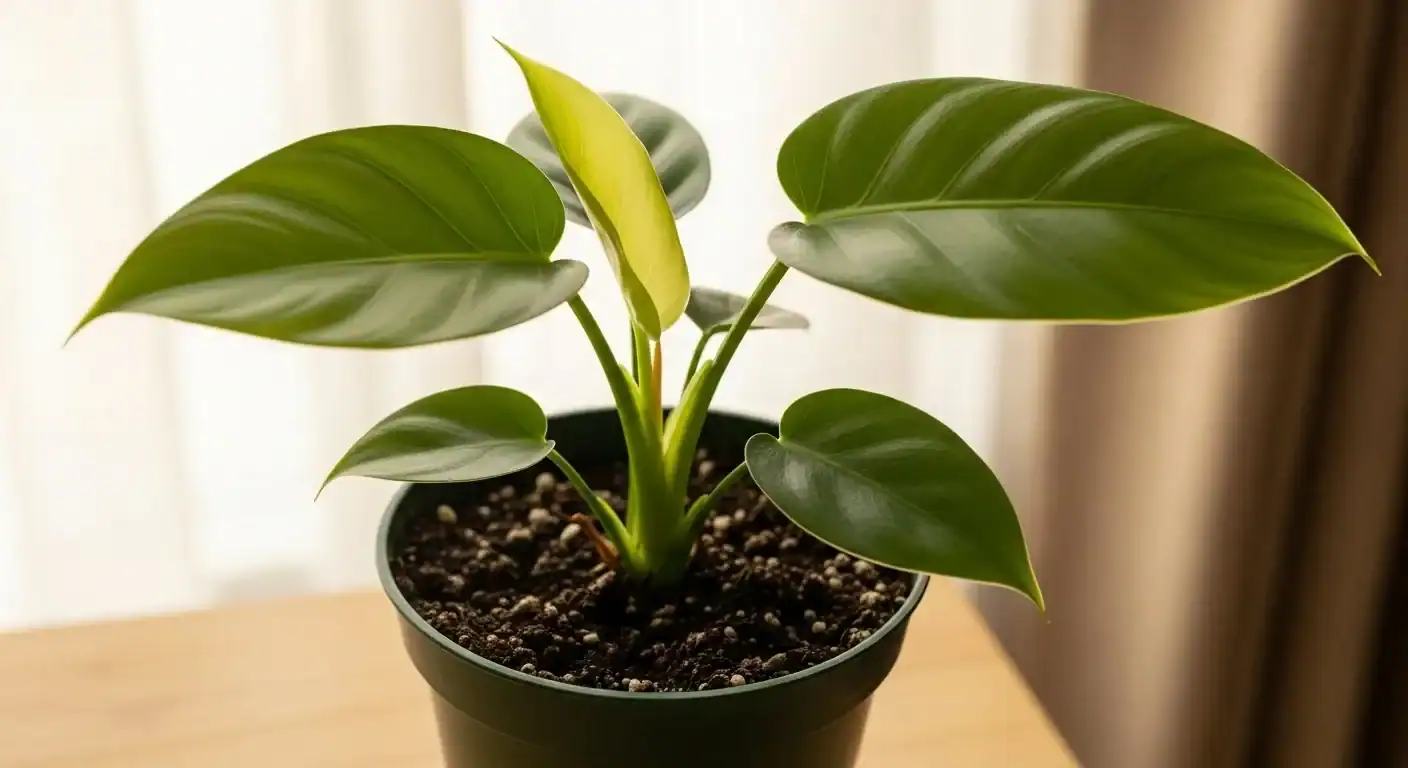
How far should a philodendron be from a window?
There is no perfect universal number because window strength changes by orientation, season, climate, and shading. But as a practical rule, many philodendrons do well either right near an east-facing window or a few feet back from stronger south- or west-facing light.
If the plant is leggy, move it gradually closer. If the leaves bleach or scorch, back it away slightly or filter the light. Small moves often solve the problem faster than major care overhauls.
Natural light vs grow lights for philodendrons
Grow lights are a strong solution when natural light is weak, especially in winter or in apartments with poor window exposure. A good grow light can help a philodendron maintain shape, color, and active growth when the room itself is not enough.
- place the light close enough to matter
- run it consistently instead of occasionally
- watch for tighter growth and better leaf size as the real proof it is working
If you are also rebuilding the root environment, pair your lighting fix with the right philodendron soil mix so the plant can use that stronger growth environment well.

GooingTop LED Grow Light, 6000K Full Spectrum Clip-On Lamp
Validated pick: this clip-on full spectrum grow light is a strong fit for philodendrons that need brighter supplemental light in darker rooms, winter conditions, or spots that sit too far from a window.
- Precise match for the main problem this section solves: not enough usable natural light
- Easy to clip near a shelf, desk, or window area without building a large grow setup
- Better fit for a single philodendron or small indoor plant zone than a bulky rack-style light
Disclosure: If you buy through this link, Plantastic Haven may earn a commission at no extra cost to you.
How to move a philodendron into better light safely
- Move it gradually instead of from deep shade straight into intense sun.
- Watch the newest leaves, because they tell you faster than old damaged foliage.
- Adjust watering as light increases, since brighter conditions usually increase water use.
- Rotate the pot if the plant has been leaning for weeks.
- Check for pests if the plant still declines after placement improves. This philodendron leaking water guide also helps separate normal guttation from stress symptoms people often misread.
Common philodendron light mistakes
- keeping the plant too far from the window
- assuming “low light tolerant” means “happy in a dark corner”
- moving the plant into harsh direct sun too fast
- blaming yellowing entirely on watering when slow growth is really caused by weak light
- treating all philodendron varieties exactly the same
FAQ about philodendron light requirements
Can philodendrons live in low light?
Yes, many can survive in low light, but they usually grow more slowly and become leggier over time. Surviving is not the same as thriving.
Do philodendrons like direct sunlight?
Most philodendrons do not want long hours of harsh direct sun, especially in hot afternoon exposure. Bright indirect light is usually the better target.
Why is my philodendron getting leggy?
Leggy growth usually means the plant is not getting enough light, especially if the stems are stretching toward a window and new leaves are coming in smaller.
Do variegated philodendrons need more light?
Usually yes. Variegated plants often need brighter indirect light to maintain strong color and balanced growth.
Should I use a grow light for my philodendron?
If your room stays dim for most of the day or winter light is weak, a grow light is often the simplest and most reliable fix.
Final takeaway
Most philodendrons do best in bright indirect light, and getting that one variable right solves more problems than most people expect. If the plant is stretching, fading, or stalling, improve placement before you assume the issue is fertilizer or some mysterious disease.
For the strongest results, use this page together with Plantastic Haven’s broader houseplant lighting guide, our staking guide, and our soil mix guide so light, structure, and root health improve together.
Clear takeaway: philodendrons prefer bright indirect light, not harsh direct sun
Short answer: Most philodendrons grow best in bright, indirect light with protection from intense direct rays. Too little light can cause leggy growth, while too much direct sun can scorch leaves.
How to use this guide
- Use filtered light near an east or bright north-facing window when possible.
- Move the plant gradually if leaves stretch or fade.
- Adjust watering when light levels change.