
Plant identification • Updated April 29, 2026
Philodendrons are identified by leaf shape, nodes, aerial roots, and growth habit
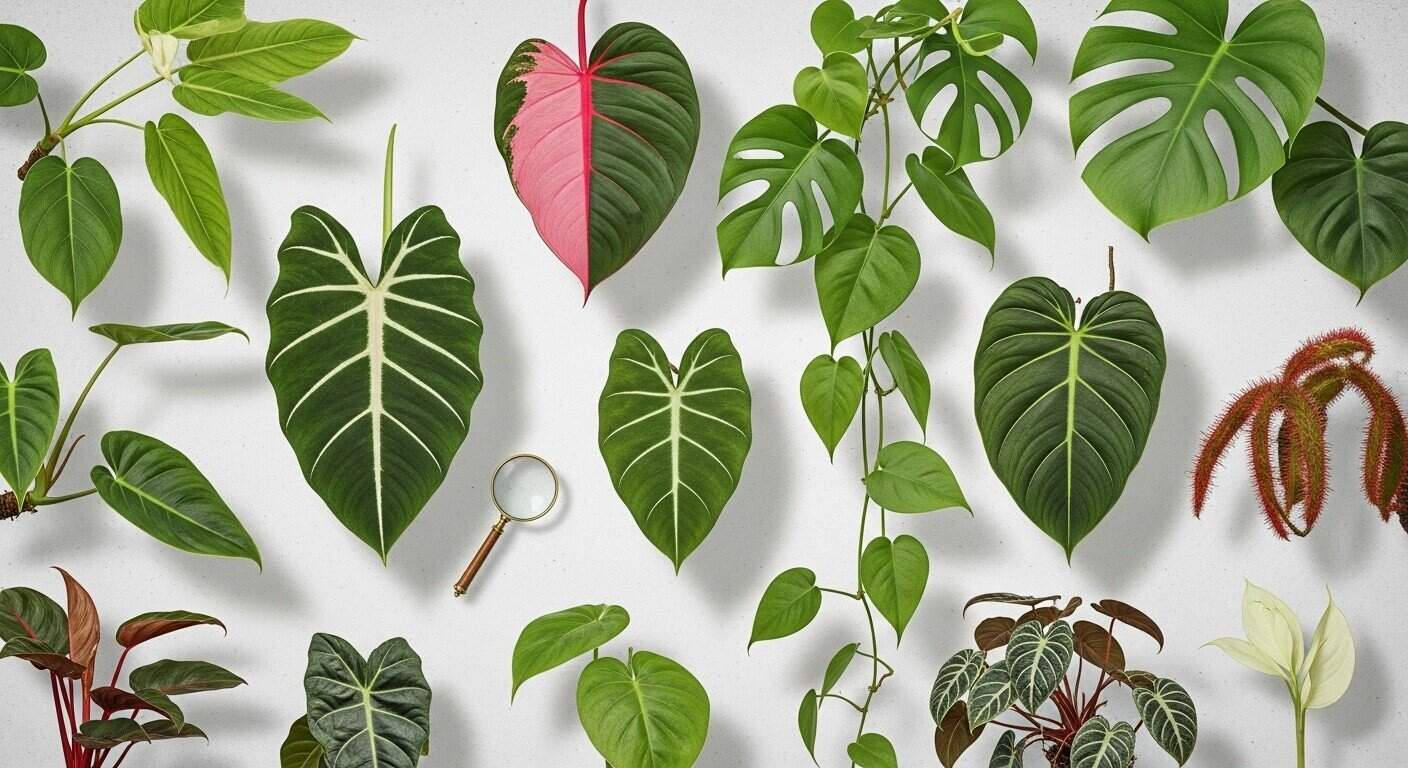
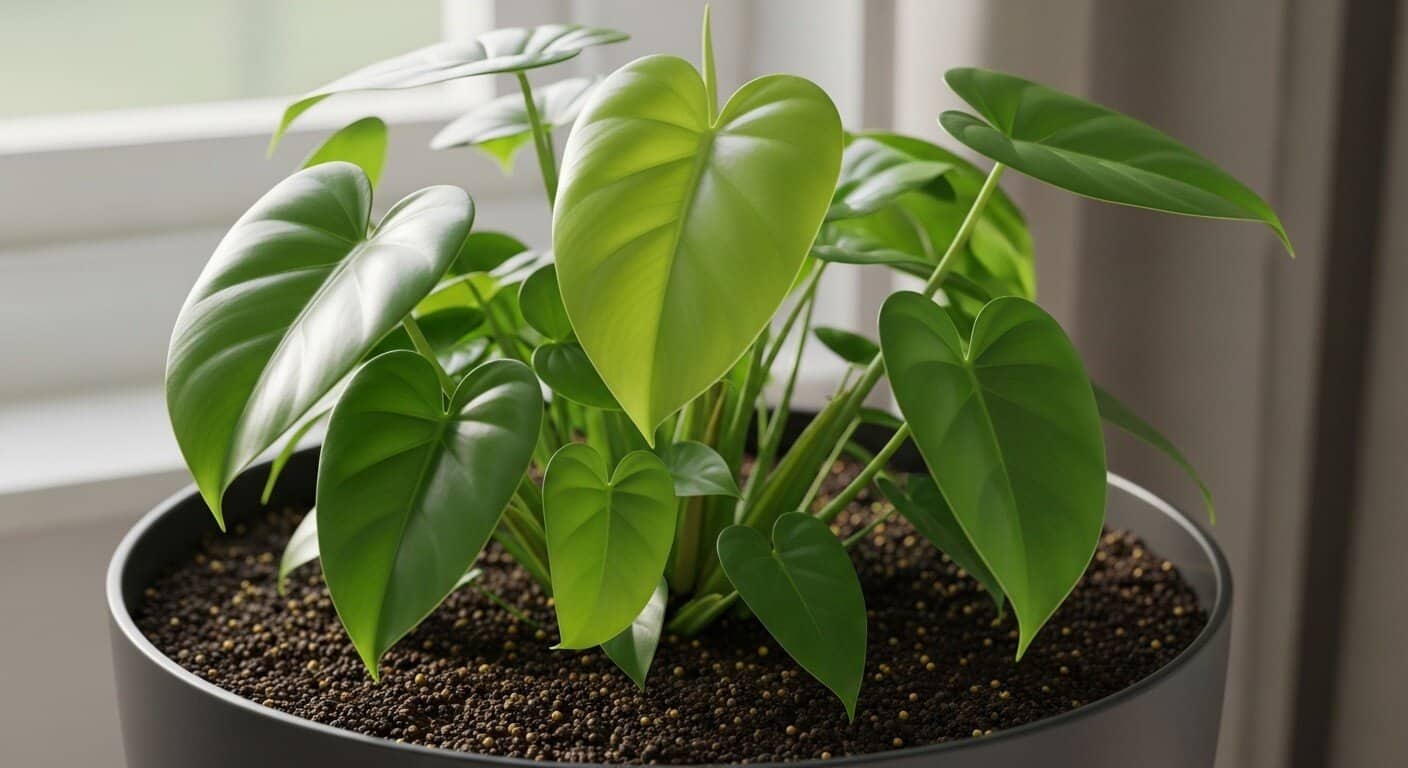
Quick answer: A philodendron often has glossy or textured leaves, visible nodes on the stem, aerial roots, and either a vining or self-heading growth habit. The exact look varies widely: some have heart-shaped leaves, others have deeply lobed, narrow, velvety, or split foliage.
Nodes and aerial roots along the stem.
Vining types trail/climb; self-heading types grow upright.
Pothos, monstera, anthurium, and some scindapsus varieties.
Decision framework
| Factor | Why it matters | Best move |
|---|---|---|
| Heart-shaped leaves | Common in vining philodendrons | Check for nodes and aerial roots. |
| Deeply lobed leaves | Split-leaf or tree-type philodendrons | Do not assume every split leaf is monstera. |
| Velvety leaves | Collector philodendrons | Often need higher humidity and gentler light. |
Step-by-step action plan
- Look at the growth habit: trailing, climbing, or upright.
- Find the node where leaves and aerial roots emerge.
- Compare leaf texture, shape, and vein pattern.
- Check whether the plant has fenestrations, lobes, or heart-shaped leaves.
- Confirm with the botanical name when buying or treating care problems.
FAQ
How can I tell philodendron from pothos?
Philodendron leaves are often thinner and more heart-shaped with a pronounced node and sheath behavior, while pothos leaves are usually thicker and waxier.
Are all philodendrons climbing plants?
No. Some climb or trail, while self-heading philodendrons grow more upright from a central base.
Editorial update: Expanded on April 29, 2026 for stronger search intent coverage, answer extraction, internal authority routing, and practical reader decisions.
What Does a Philodendron Look Like? Leaves, Growth Habit & ID Clues
PlantasticHaven practical care guide
Quick answer: Learn what Philodendrons look like, how their leaves and growth habits vary, and how to tell them apart from pothos and other common houseplants.
This guide is written for normal indoor homes, not ideal greenhouse conditions. Claims are kept practical, unsupported hype is avoided, and plant-health guidance is framed as observation and care support rather than guaranteed diagnosis. About · Editorial Policy · Review Methodology · Contact
PlantasticHaven care guide · Updated 2026
What Does a Philodendron Look Like? Types, Identification & Care Differences
A Philodendron identification hub for leaf shapes, growth habits, lookalikes, toxicity, and next-step care guides.
Quick summary
Common Philodendron identification features
Philodendron is a large genus, so no single leaf shape identifies every plant. Instead, look at multiple clues: growth habit, nodes, aerial roots, petiole shape, leaf texture, and new growth.
| Feature | What to look for |
|---|---|
| Growth habit | Vining, climbing, crawling, or self-heading |
| Nodes | Visible points where leaves and roots emerge |
| Aerial roots | Often present on climbing/vining types |
| Leaf shape | Heart-shaped, lobed, elongated, velvety, or split depending on species |
| New growth | Often emerges from cataphylls or sheaths on many types |
| Root behavior | Aroids with chunky-root-friendly potting needs |
PlantasticHaven guide
Major Philodendron types
| Type | Examples | Care difference |
|---|---|---|
| Vining Philodendrons | Heartleaf, Brasil, micans | Trail or climb; easy to prune and propagate |
| Self-heading types | Birkin, Congo, Imperial Green | Grow more upright and compact |
| Climbing collector types | Melanochrysum, verrucosum, Mayoi | Often need support and higher consistency |
| Crawling types | Gloriosum and similar plants | Need wide pots and rhizome-aware planting |
| Variegated types | White, cream, lime, or patterned cultivars | Need enough light to maintain color but avoid scorching |
PlantasticHaven guide
Philodendron vs pothos, Monstera, and other lookalikes
Philodendrons are often confused with pothos and Monstera because all are common tropical aroids.
| Lookalike | Quick difference | Common confusion |
|---|---|---|
| Pothos | Often thicker, waxier leaves with grooved petioles | Heartleaf philodendron vs golden pothos |
| Monstera | Mature leaves may fenestrate or split dramatically | Young Monstera vs split/lobed Philodendron |
| Syngonium | Arrowhead-shaped leaves and different growth pattern | Juvenile leaf confusion |
| Scindapsus | Silver-patterned satin leaves, different texture | Silver Philodendron naming confusion |
PlantasticHaven guide
Care differences after identification
Once you know the growth habit, care becomes easier.
- Vining types need pruning or support to stay full.
- Climbing types often produce larger leaves with a pole or plank.
- Self-heading types need room for upright growth and stable light.
- Crawling types need wide containers and careful rhizome placement.
- Variegated types need brighter indirect light than plain green types.
PlantasticHaven guide
Philodendron pet and child safety
Philodendrons are not the best choice for chewing pets or small children because plant tissue can irritate the mouth and digestive tract if eaten.
Quick answers
FAQ
How do I know if my plant is a Philodendron?
Look for growth habit, nodes, aerial roots, leaf shape, and new growth structure. Compare multiple features instead of relying on one leaf.
Is pothos a Philodendron?
No. Pothos and Philodendron are different plants, although common names and similar heart-shaped leaves cause confusion.
Are all Philodendrons toxic to pets?
Philodendrons are generally treated as unsafe for pets that chew plants. Verify species and keep them out of reach.
What is the easiest Philodendron?
Heartleaf philodendron is one of the easiest. Birkin is manageable with proper light and watering, while some collector types are more demanding.
References