
Quick answer: Water Monstera when the upper part of the potting mix has dried, not on a fixed weekly schedule. Water thoroughly until excess drains, then wait until the mix partly dries again. In brighter light and warmth it may dry faster; in winter, low light, or dense soil it can stay wet much longer.
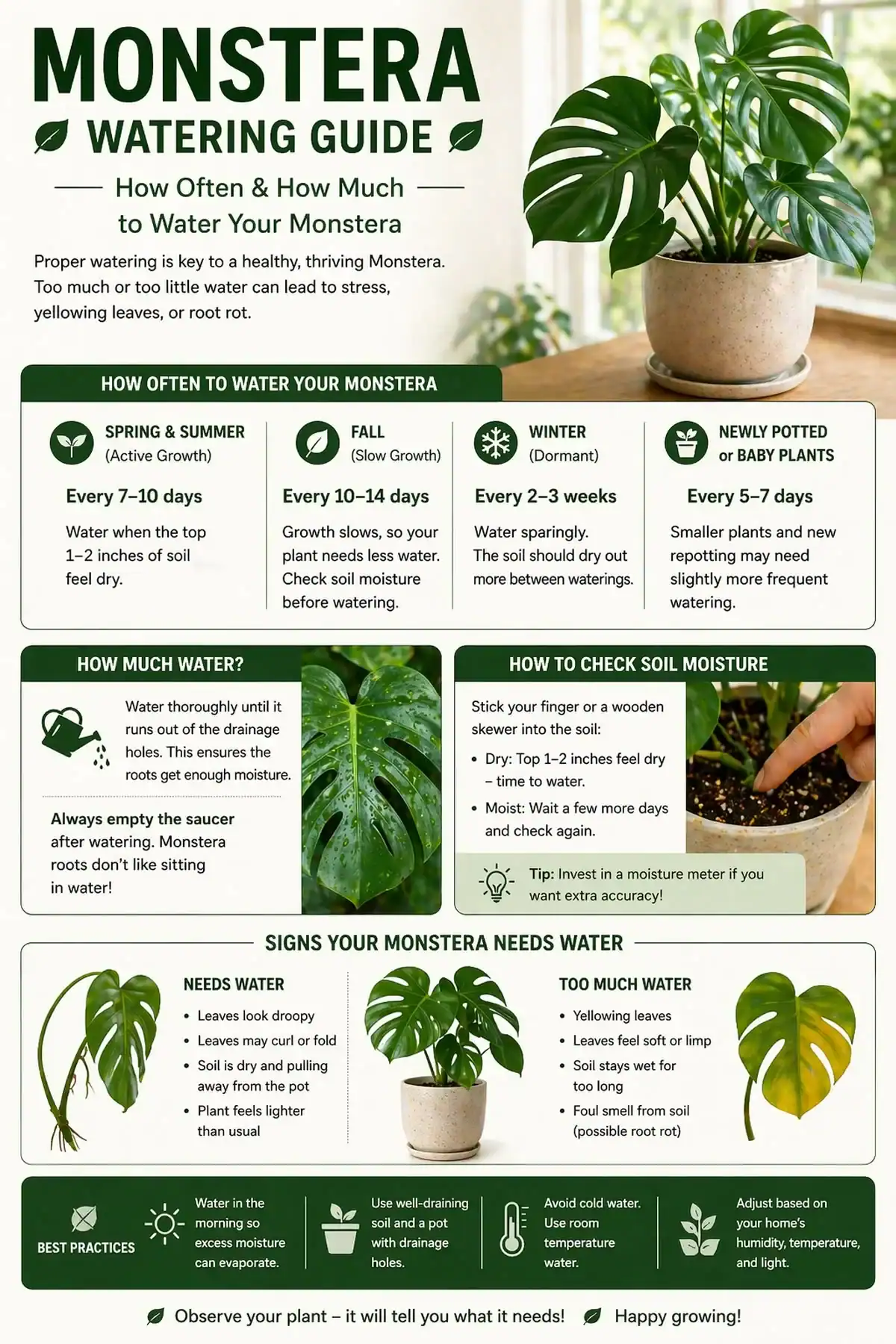
Monstera watering decision table
Monstera watering is about partial dry-down, not bone-dry drought or constant moisture. Use these signals together.
| Signal | Likely cause or best fit | How to confirm | Best next step |
|---|---|---|---|
| Top 25-33% dry | Usually ready to water | Finger or skewer shows upper mix dry | Water thoroughly and drain |
| Upper mix damp | Not ready | Soil cool and sticks to finger | Wait and recheck |
| Wet soil plus drooping/yellowing | Root stress risk | Pot heavy for days; sour smell possible | Stop watering and inspect drainage |
| Dry, pulling from pot edge | Underwatered or hydrophobic mix | Pot very light; leaves limp | Water slowly in stages |
| Newly repotted or large pot | Slow/different drying pattern | Root ball smaller than soil volume | Check deeper before each watering |
Why this rewrite answers the real Monstera watering intent
Monstera owners usually search watering because something changed: drooping, yellow leaves, slow growth, a new pot, or conflicting weekly advice. This rewrite gives an answer that works across pot sizes and seasons instead of promising a universal interval.
The article supports AI visibility by making the core rule easy to quote: water when the upper mix has dried, water thoroughly, drain completely, and adjust to light, pot size, season, and soil density.
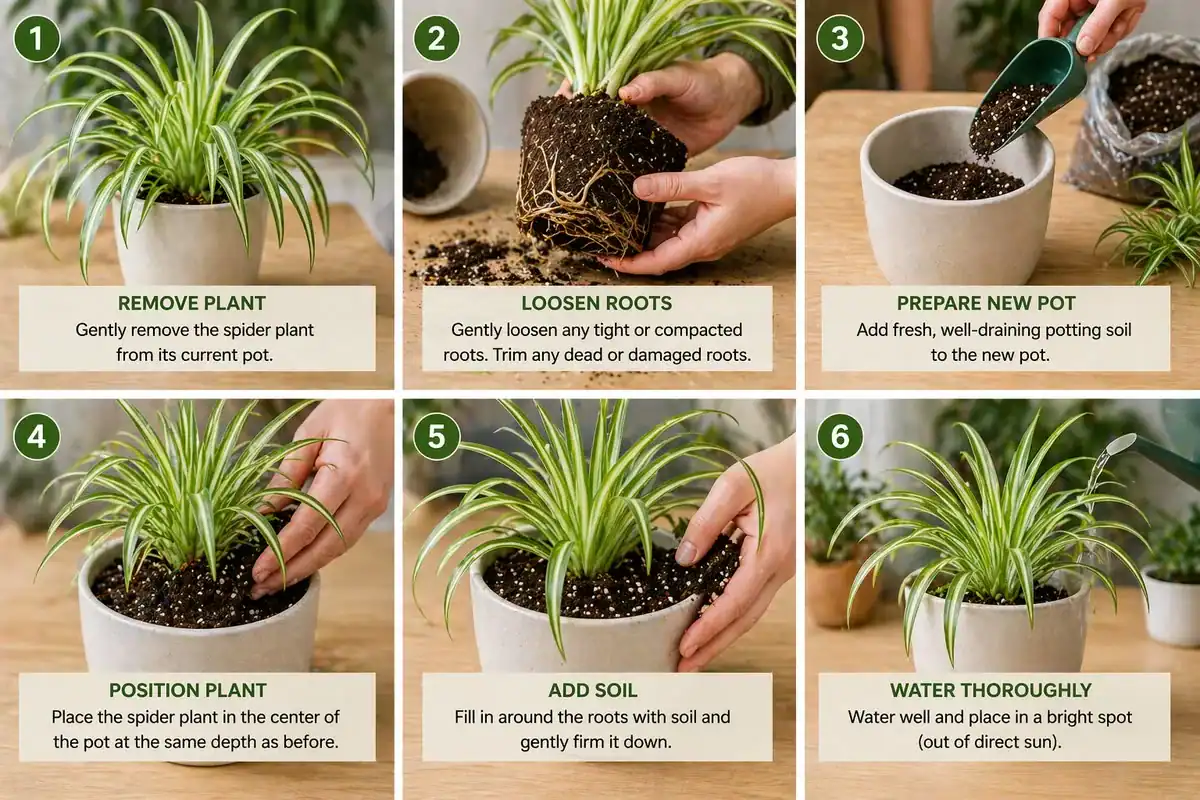
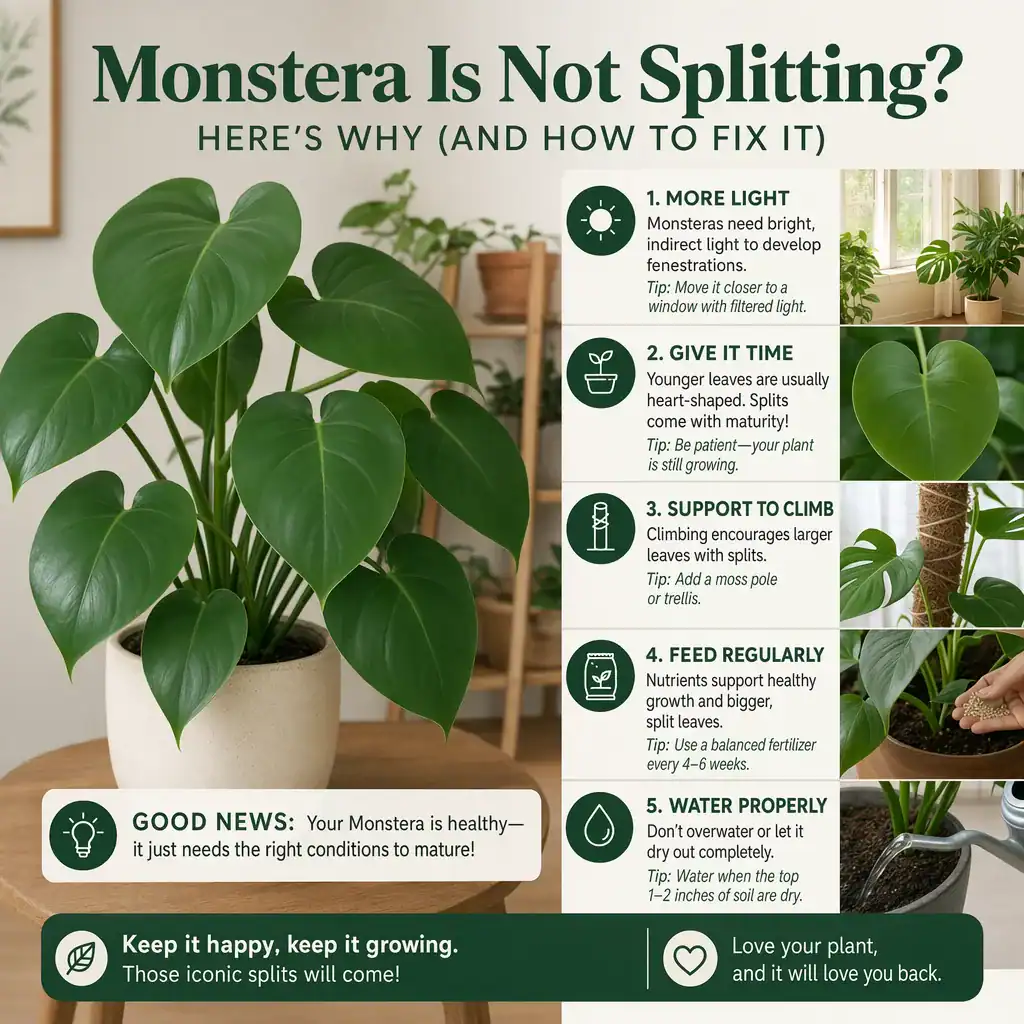
Why Monstera roots need air
Monstera is an aroid with roots that do best in an airy, well-drained mix. Constant saturation reduces oxygen and can lead to yellow leaves, drooping, root decline, and slow recovery.
What “partly dry” means
For many indoor Monsteras, the upper quarter to third of the mix drying is a useful baseline. The exact depth depends on pot size and soil structure.
Why chunky mix changes watering
A chunky aroid mix may feel dry on the surface while still holding pockets of moisture. It also drains faster than dense peat, so you need to learn the specific pot rather than copy a schedule.
Step-by-step practical instructions
Use this repeatable routine for Monstera deliciosa and similar indoor Monsteras.
Press a finger or skewer into the upper portion of the pot and confirm it has dried.
A lighter pot suggests dry-down; a heavy pot suggests moisture remains.
Pour slowly around the pot so the whole root ball is moistened, not just one channel.
Let excess water leave the holes and empty the saucer.
If water collected again in the cachepot, dump it.
Check more often in bright spring/summer and less often in darker winter conditions.
Common mistakes and troubleshooting
Watering every Sunday no matter what
Schedules ignore changes in light, temperature, and pot size.
Assuming droop always means thirsty
Wet soil plus droop often means root stress.
Using dense soil in a large pot
Dense soil can hold water around roots too long.
Letting a decorative pot collect water
Standing water defeats even good soil.
Pet safety, toxicity, and household-risk notes
Place large Monsteras so pets cannot chew leaves or aerial roots. Clean fallen leaf pieces promptly.
Helpful plant-care products
Amazon affiliate disclosure: PlantasticHaven may earn from qualifying purchases through these links. Each button uses the affiliate tag papalex-20. Product images below are actual product imagery from verified manufacturer or major-retailer product pages; for full Amazon Associates compliance, refresh price, availability, ratings, and Amazon-hosted images through Amazon PA-API before publishing dynamic claims.
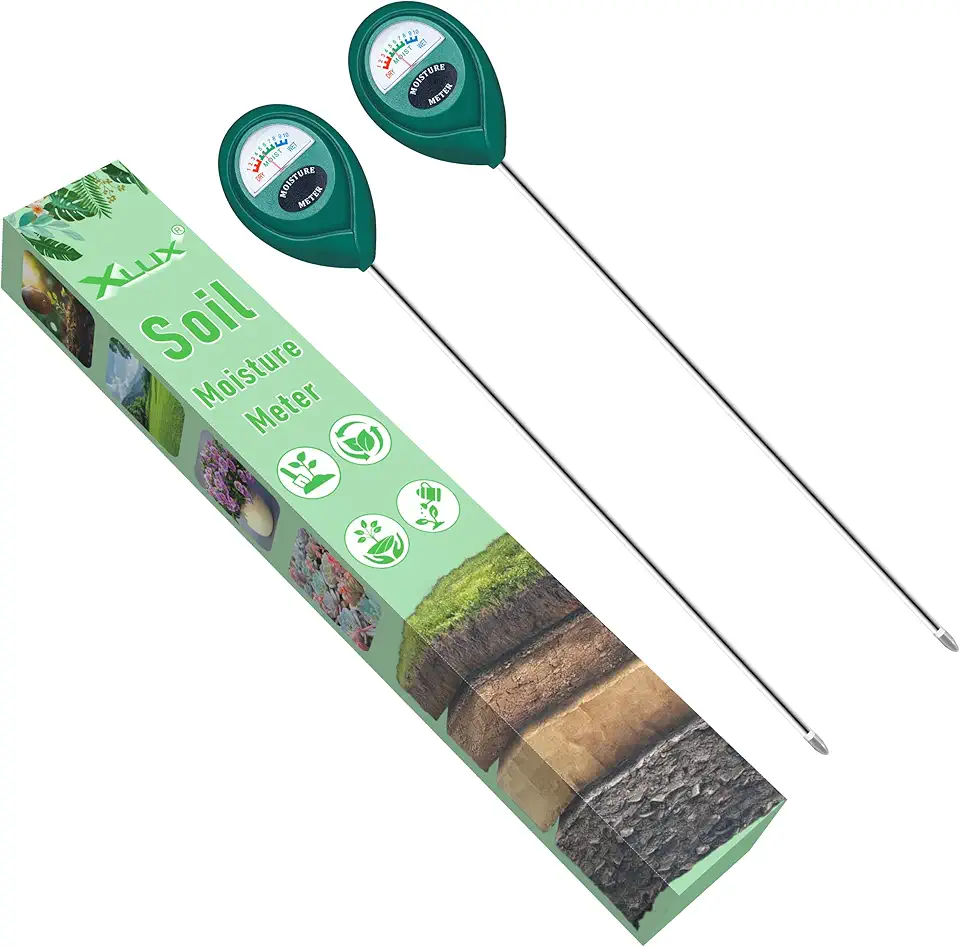
XLUX Long Probe Deep Use Soil Moisture Meter
Buyer-risk note: Use as a second opinion, not the only watering rule; pot weight and soil feel still matter.
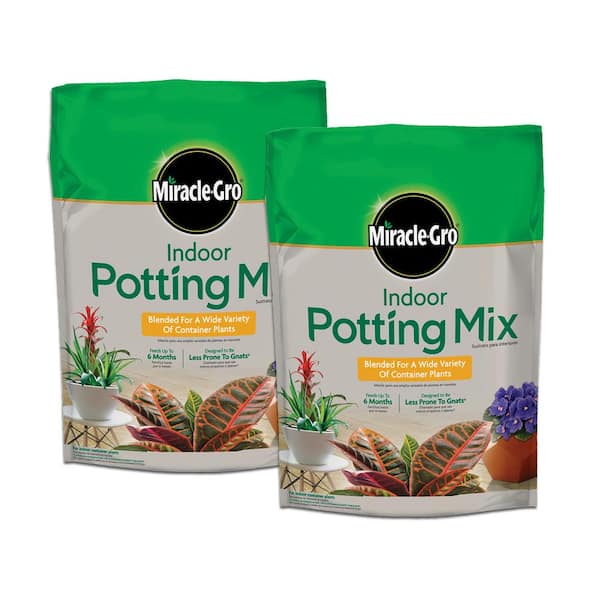
Miracle-Gro Indoor Potting Mix, 6 qt. 2-Pack
Buyer-risk note: Do not use straight from the bag for rot-prone plants in dim rooms without adding aeration.
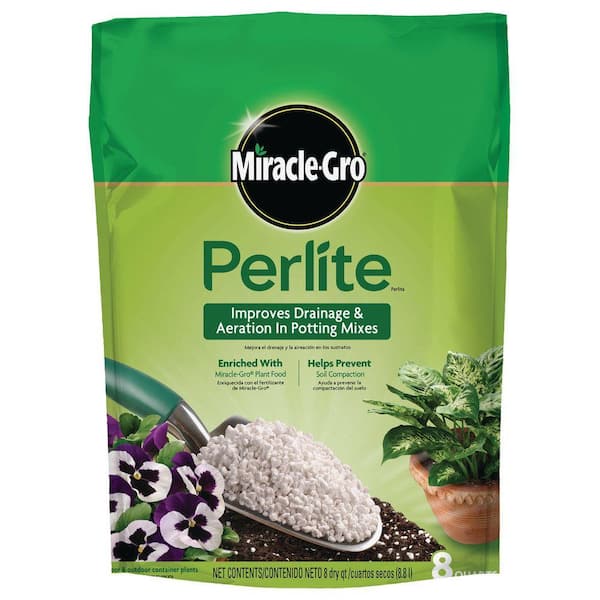
Miracle-Gro Perlite, 8 qt.
Buyer-risk note: Wear a mask when mixing dusty amendments and moisten lightly before handling.
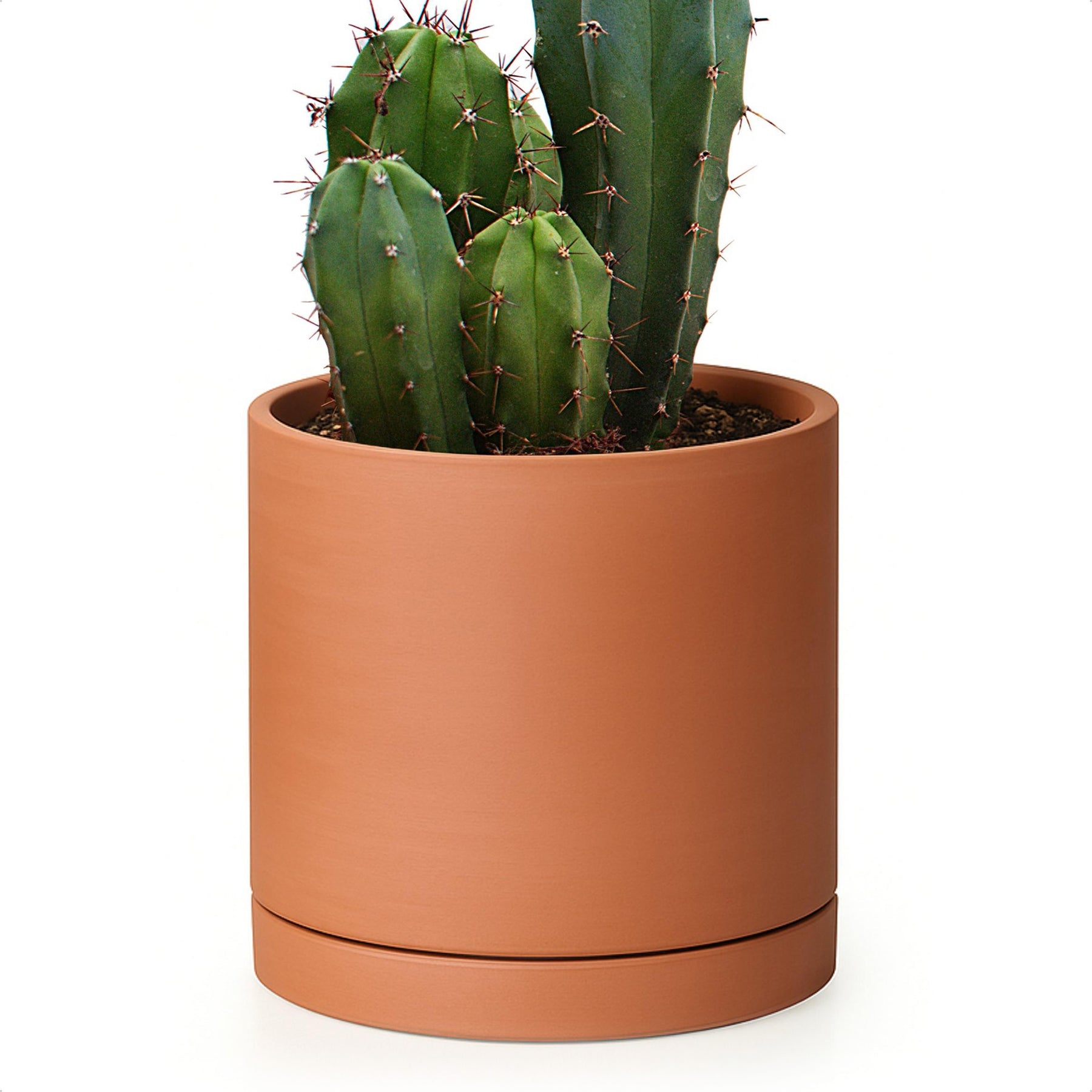
D'vine Dev 6 in. Terracotta Plant Pot with Drainage Hole and Saucer
Buyer-risk note: Terracotta dries faster, so check moisture after switching pot materials instead of copying the old schedule.

Mosser Lee Sphagnum Moss Pole for Indoor Climbing Plants
Buyer-risk note: Install gently; forcing a pole through dense roots can break roots and destabilize the plant.
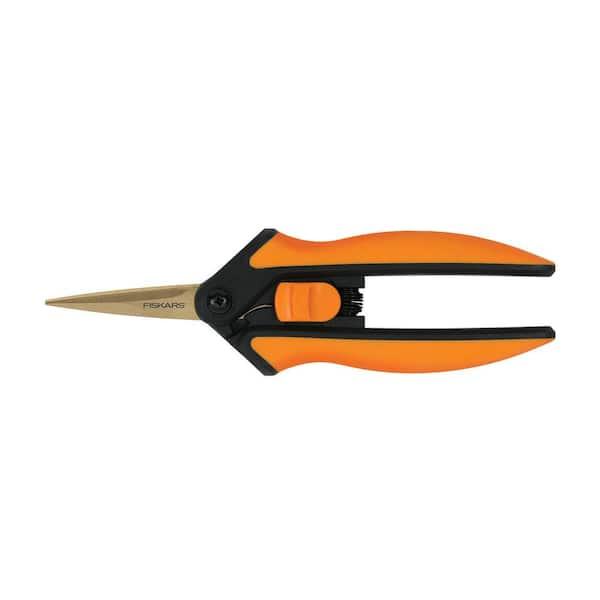
Fiskars 6 in. Micro-Tip Pruning Snips
Buyer-risk note: Disinfect before and after rescue cuts so rot or pests are not spread plant-to-plant.
Helpful YouTube video
This Monstera care video covers watering, light, and setup for beginners who want a visual walkthrough.
FAQ
How often should I water Monstera?
Water when the upper part of the mix has dried. The exact interval changes with light, pot size, soil, temperature, and season.
Should Monstera dry out completely?
Avoid keeping it constantly wet, but do not repeatedly let the entire root ball become bone dry either.
Why is my Monstera drooping after watering?
Drooping after watering can mean root stress, poor drainage, compact soil, or a pot that stayed wet too long.
Is bottom watering good for Monstera?
It can work if the root ball absorbs evenly and excess water is removed, but top watering is often easier for flushing and even moisture.
What water is best for Monstera?
Room-temperature water is usually fine. If leaf tips and mineral crusts are persistent, consider filtered water and occasional flushing.