
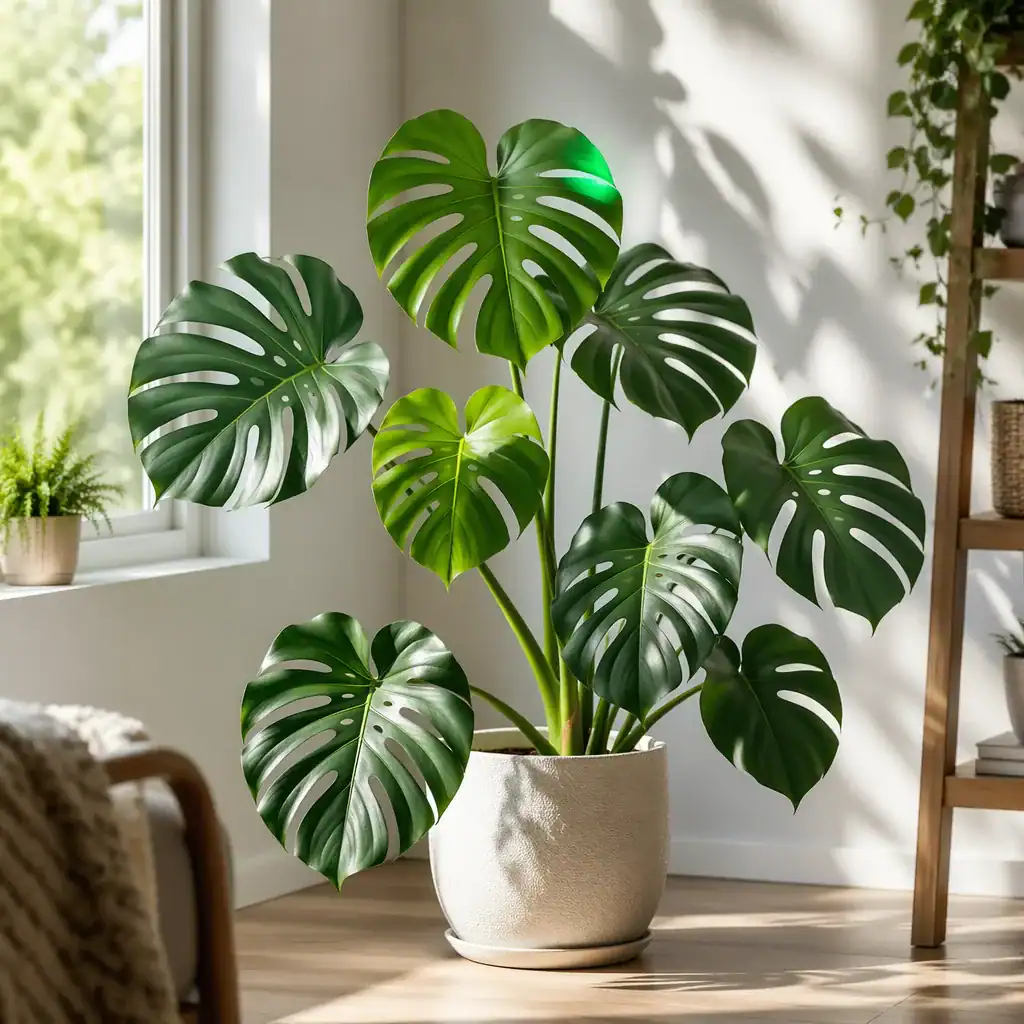
Quick answer: Monstera usually grows best in bright indirect light. Too little light can slow growth, reduce leaf size, and delay or limit fenestrations. Too much direct hot sun can scorch leaves. The sweet spot is a bright room with filtered or indirect daylight for most of the day.
Amazon affiliate disclosure: PlantasticHaven may earn from qualifying purchases through Amazon links. These picks are matched to this specific guide because: lighting article with direct product need.
Relevant Amazon picks for Monstera Light Requirements: Best Light for Bigger, Healthier Leaves
Start with the plant problem first, then choose only the supply that solves it. Skip any product that does not match your light, pot size, watering pattern, or plant condition.
Full-spectrum LED grow light
Adds usable light when windows are too dim or seasonal light drops.
Shop on AmazonWho this guide is for
- Monstera owners trying to choose the best indoor placement
- people dealing with small leaves, slow growth, weak fenestrations, or a plant leaning toward the window
- beginners who want a realistic light rule instead of vague advice
Monstera light needs at a glance
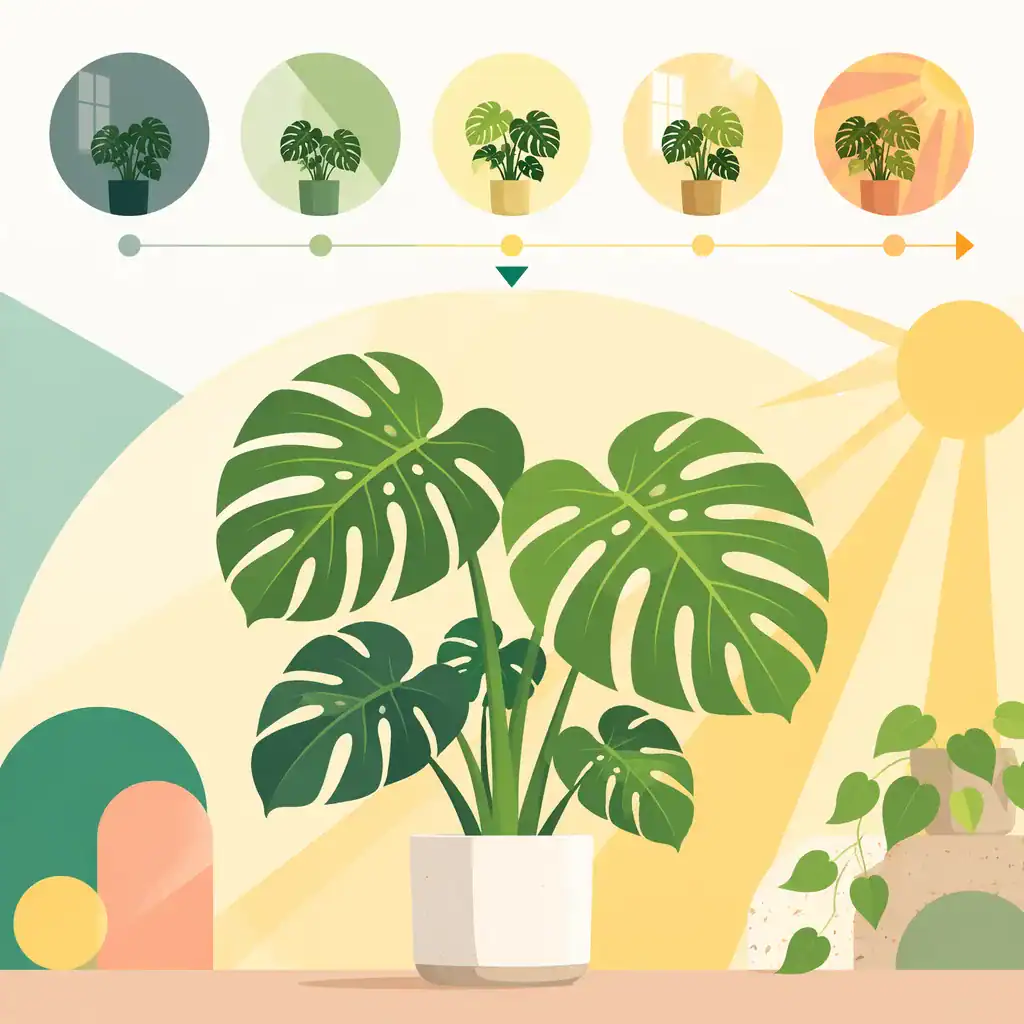
| Light situation | What usually happens | Best response |
|---|---|---|
| Bright indirect light | Best balance of growth, larger leaves, and stronger splitting | Ideal baseline indoors |
| Moderate light | Plant often survives but grows more slowly | Fine short term, but not ideal for mature growth |
| Very low light | Smaller leaves, long gaps, weak or absent fenestrations | Move closer to a brighter window |
| Harsh direct afternoon sun | Leaf scorch, pale patches, heat stress | Filter the light or move the plant back |
What bright indirect light means for Monstera
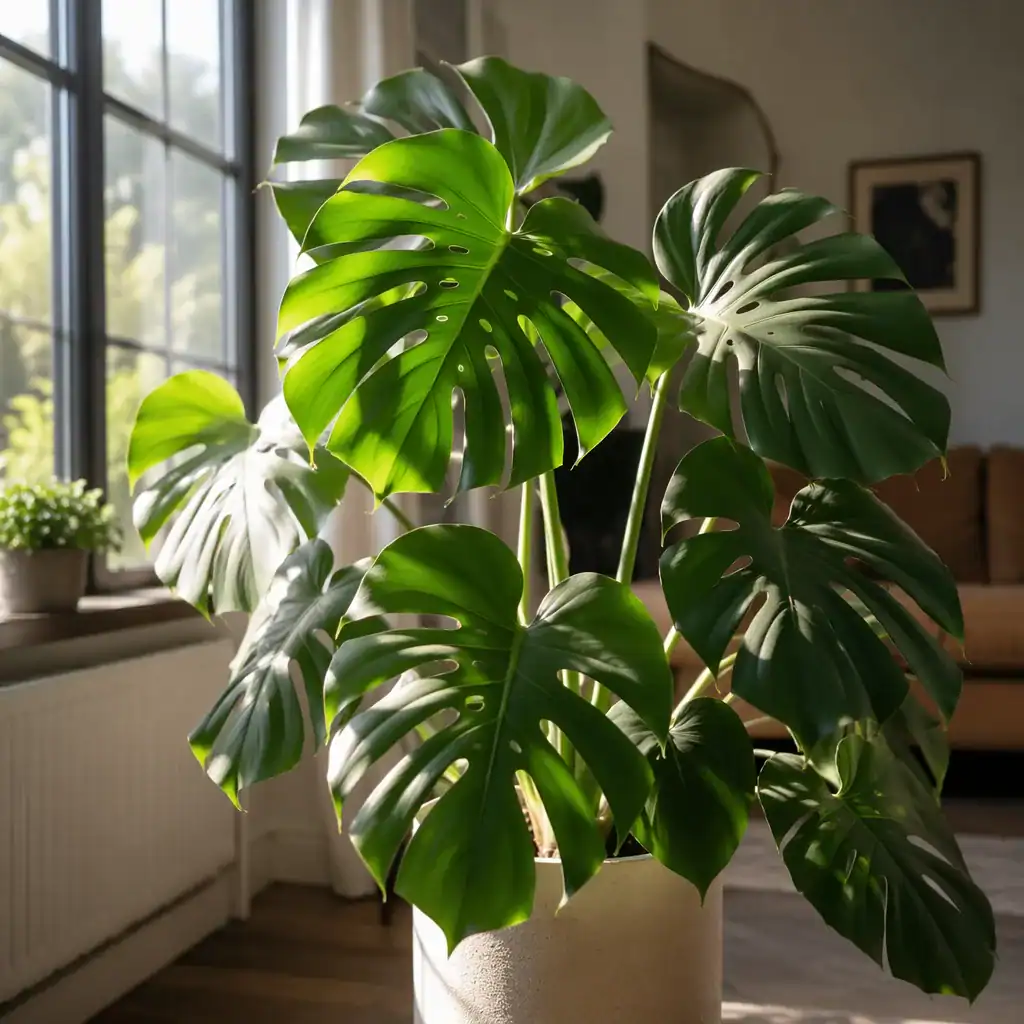
Bright indirect light usually means strong daylight without long hours of harsh direct sun hitting the leaves. Near an east window often works well. A bright south or west window can also work if the plant is set back from the glass or the light is filtered by a sheer curtain.
Signs your Monstera needs more light
- new leaves stay small
- long bare gaps between leaves
- little or no fenestration on mature growth
- slower growth during the active season
- the plant leans strongly toward one window
Signs the light is too harsh
- bleached-looking or pale patches
- crispy brown scorch marks
- drooping soon after a move into direct sun
- heat buildup near a hot window in the afternoon
How light affects fenestrations
Light is one of the biggest reasons indoor Monstera leaves fail to split well. Mature growth needs enough energy to produce larger leaves and deeper cuts. If your Monstera is otherwise healthy but keeps making plain juvenile-looking leaves, weak light is one of the first things to reassess.
Best placement tips for indoor Monstera
- Start in a bright room rather than a dark interior corner.
- Increase light gradually if the plant has been living in lower light.
- Rotate the pot every week or two for more even growth.
- Recheck watering after moving to a brighter spot because the mix may dry faster.
What not to do
- do not expect large split leaves in very low light
- do not move a shade-grown Monstera straight into intense direct sun
- do not blame light for every yellow leaf without checking watering and roots too
Related guides
- Monstera Care Guide
- Monstera Watering Guide
- Why Are My Monstera Leaves Turning Yellow?
- Why Your Monstera Is Not Splitting
FAQ
Can Monstera live in low light?
It can tolerate lower light better than some houseplants, but it usually looks smaller, slower, and less dramatic there.
Is morning sun okay for Monstera?
Gentler morning sun is often fine indoors, depending on climate and window intensity.
Why are my Monstera leaves small?
Weak light, young growth, root crowding, and inconsistent feeding can all contribute, but poor light is a common cause indoors.
Sources
Reviewed by PlantasticHaven editorial: Updated for 2026 indoor placement, larger-leaf growth, and realistic fenestration expectations. This guide is based on practical indoor growing observations and aligned with University of Florida IFAS guidance on Monstera deliciosa.