
Quick answer: Mushy snake plant leaves usually mean excess moisture, root or rhizome rot, or cold damage. Stop watering immediately, remove the plant from the pot, inspect roots and leaf bases, cut away soft or foul-smelling tissue with clean tools, and repot only firm healthy sections into a draining pot with fast-draining mix.
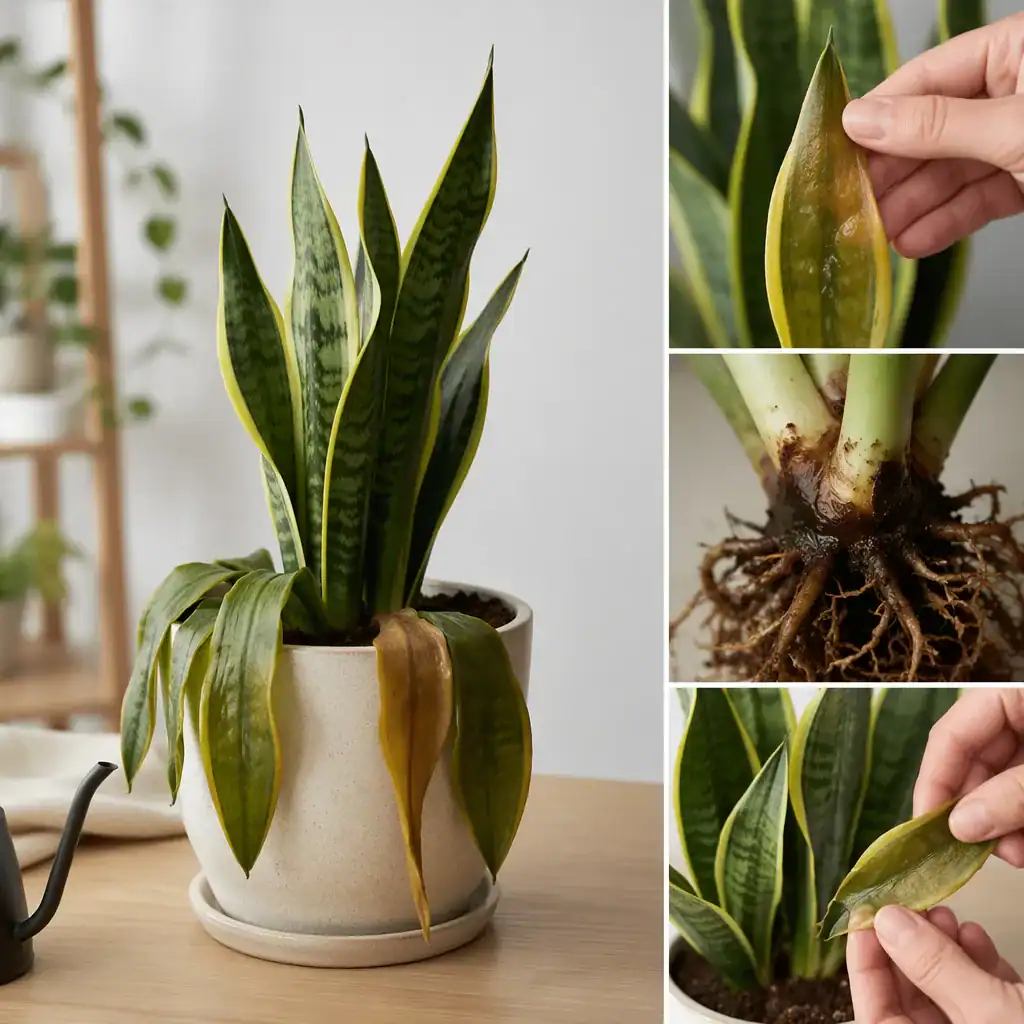
Mushy snake plant rescue table
Use the table to decide whether the leaf, rhizome, or whole plant can be saved. Firm tissue is useful; mushy tissue is not.
| Signal | Likely cause or best fit | How to confirm | Best next step |
|---|---|---|---|
| Soft leaf base with wet soil | Overwatering or crown rot | Base collapses or smells sour | Cut away mushy tissue and inspect rhizome |
| Mushy patches after cold exposure | Cold injury | Damage appeared after window chill or transport | Remove damaged tissue and move warmer |
| Black roots, sour smell | Advanced root rot | Roots are slimy, hollow, or dark | Keep only firm white/tan roots and rhizomes |
| Firm rhizome with some damaged leaves | Salvageable plant | Rhizome is solid and not smelly | Repot firm sections into airy mix |
| All rhizomes soft | Plant likely unsalvageable | No firm tissue remains | Discard safely and sterilize tools/pot |
Why this rescue guide needs to be direct
A mushy snake plant article must move faster than a general care guide. Readers may be hours or days away from losing the plant, so the rewrite begins with stop-watering, root inspection, cutting, and salvage decisions.
For SEO and AI visibility, this page should own the emergency intent: mushy leaves, soft base, wet soil, rotten rhizome, sour smell, cold damage, and how to save healthy sections.
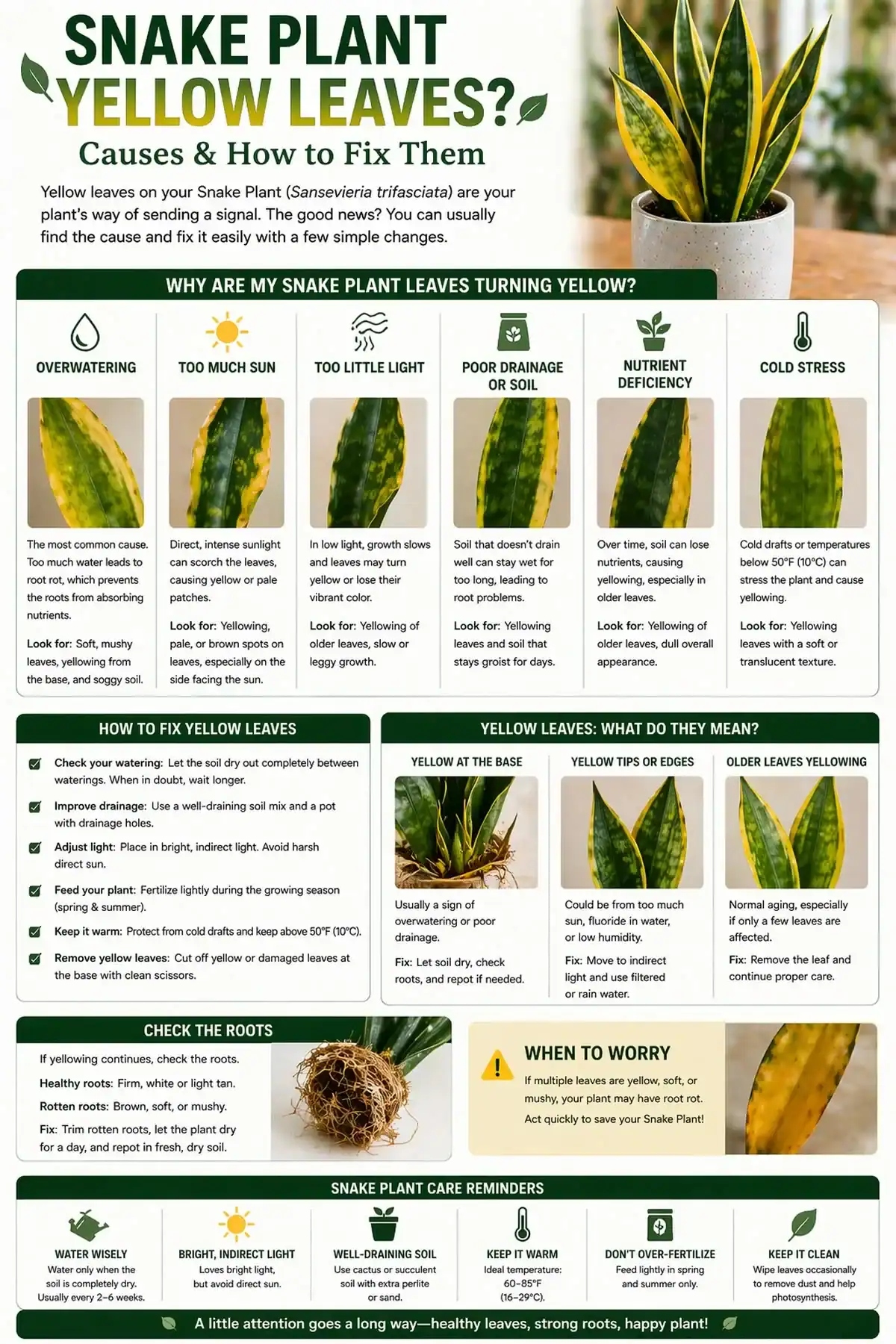

Why mushy tissue is serious
Mushy tissue means cells have collapsed. In snake plants, that often follows wet low-oxygen conditions or cold injury. Once tissue is soft and rotting, it cannot become firm again.
What to keep
Keep only firm, clean, non-smelly tissue. Healthy rhizomes should feel solid. Healthy roots are usually firm and pale to tan, not black, hollow, or slimy.
What to throw away
Discard mushy leaves, foul-smelling rhizomes, and rotten roots. Keeping soft tissue can spread decay into sections that are still healthy.
Step-by-step practical instructions
This is the emergency rescue sequence. Work calmly and keep tools clean.
Do not add more water to a plant with mushy leaves.
Slide it out gently and remove loose wet soil so roots and rhizomes are visible.
Use clean snips or a sterile blade to remove soft, black, slimy, or foul tissue.
Keep only sections that feel solid and have no spreading softness.
Allow cut surfaces to callus slightly before putting them back into mix.
Use a snug pot with drainage and a gritty succulent-style mix.
Wait until the plant has settled and the mix is appropriately dry before watering again.
Common mistakes and troubleshooting
Trying to save mushy tissue
Soft tissue does not recover; it usually spreads decline.
Repotting into wet dense soil
A rescue plant needs air around roots, not another soggy pot.
Watering right after cutting rot
Fresh cuts plus wet soil can restart the problem.
Ignoring cold damage
A cold window or winter delivery can mimic overwatering damage.
Pet safety, toxicity, and household-risk notes
Rotten plant material can smell and should be discarded securely. Keep cuttings and discarded leaves away from pets.
Helpful plant-care products
Amazon affiliate disclosure: PlantasticHaven may earn from qualifying purchases through these links. Each button uses the affiliate tag papalex-20. Product images below are actual product imagery from verified manufacturer or major-retailer product pages; for full Amazon Associates compliance, refresh price, availability, ratings, and Amazon-hosted images through Amazon PA-API before publishing dynamic claims.
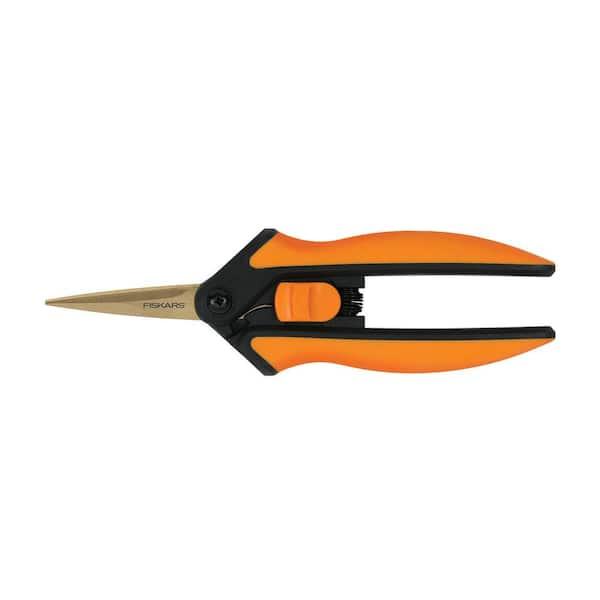
Fiskars 6 in. Micro-Tip Pruning Snips
Buyer-risk note: Disinfect before and after rescue cuts so rot or pests are not spread plant-to-plant.
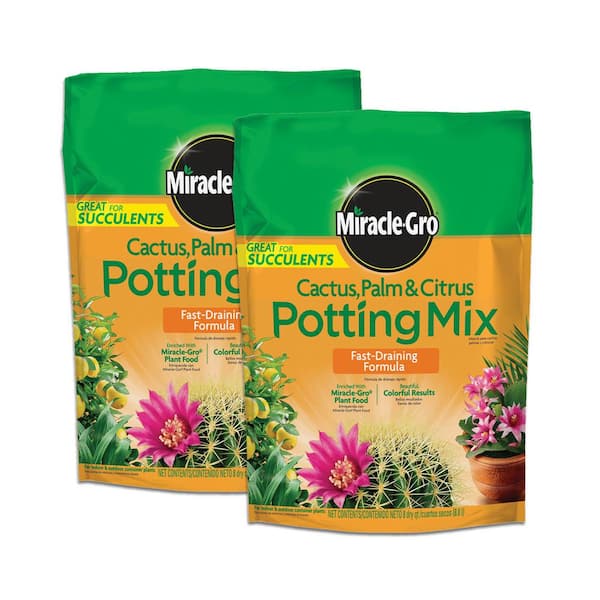
Miracle-Gro Cactus, Palm & Citrus Potting Mix, 8 qt. 2-Pack
Buyer-risk note: Do not use it as an excuse to water frequently; even fast-draining mixes can stay wet in oversized pots.
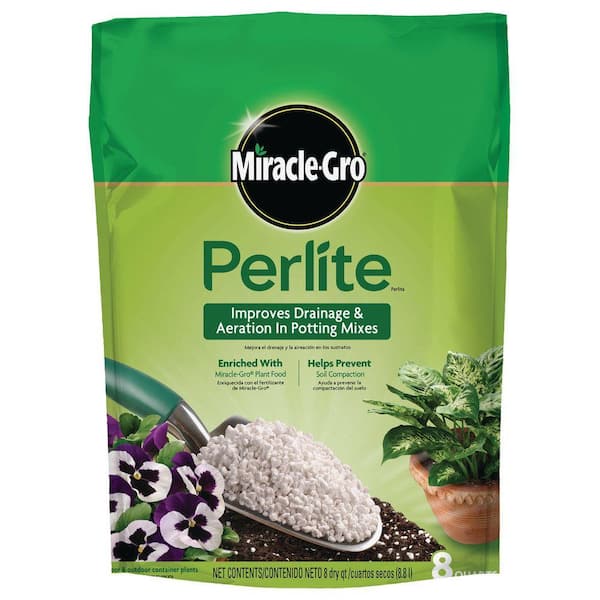
Miracle-Gro Perlite, 8 qt.
Buyer-risk note: Wear a mask when mixing dusty amendments and moisten lightly before handling.
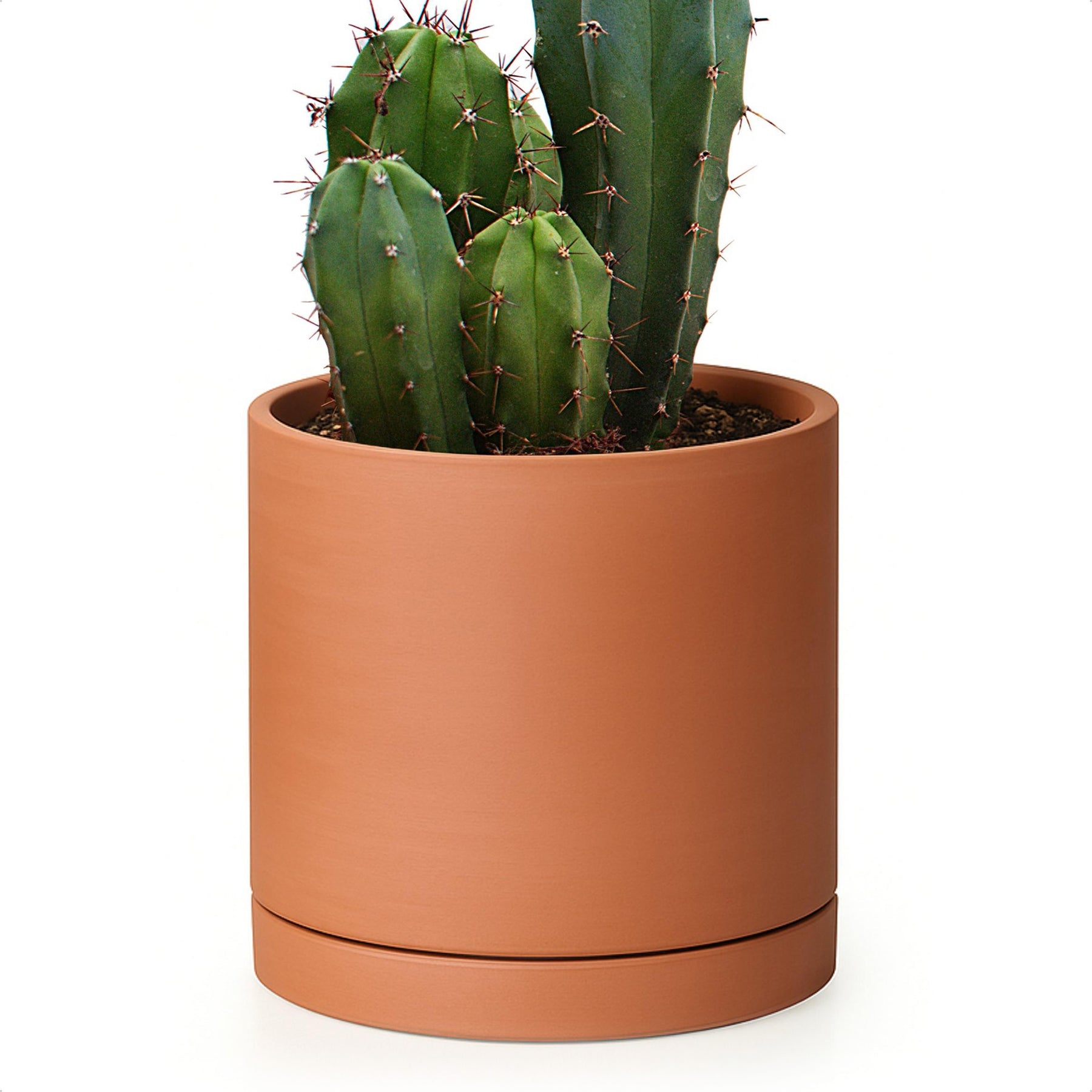
D'vine Dev 6 in. Terracotta Plant Pot with Drainage Hole and Saucer
Buyer-risk note: Terracotta dries faster, so check moisture after switching pot materials instead of copying the old schedule.

XLUX Soil Moisture Sensor Meter, 2-Pack
Buyer-risk note: Never leave probes in soil permanently and do not force them through hard, rocky mix.
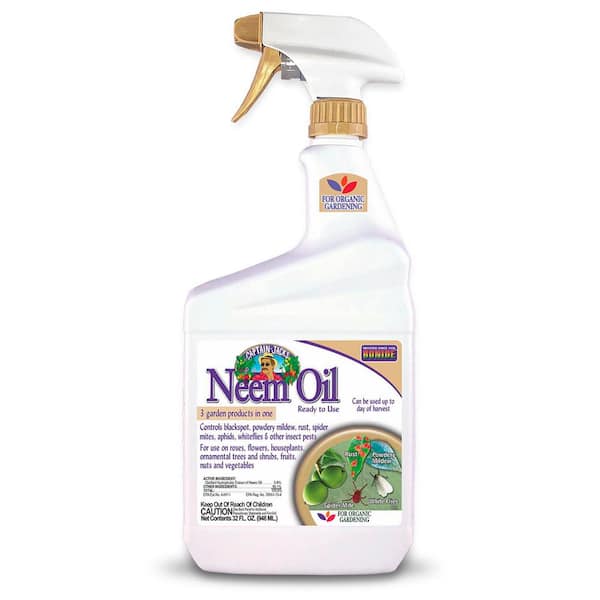
Bonide Captain Jack's Neem Oil, 32 oz Ready-to-Use Spray
Buyer-risk note: Always read the label; avoid spraying stressed plants, direct sun, open terrariums, or pet-accessible leaves.
Helpful YouTube video
The embedded video supports prevention after rescue by showing the watering and soil choices that prevent mushy leaves from returning.
FAQ
Can a mushy snake plant leaf recover?
No. Mushy tissue is damaged. Remove it and focus on saving firm roots, rhizomes, or leaves.
Should I water after repotting a rotten snake plant?
Usually wait. Fresh cuts and stressed roots need air and time; water only when the new mix is appropriately dry.
Can I propagate a snake plant with mushy leaves?
Only firm healthy sections are worth propagating. Do not propagate soft or rotten tissue.
Why did my snake plant turn mushy in winter?
Cold plus wet soil is a common trigger. Drafts, cold windows, and winter transport can damage tissue.
How do I prevent mushy leaves from coming back?
Use a draining pot, fast-draining mix, brighter indirect light, warm placement, and water only after dry-down.