
TL;DR: Winter houseplant losses usually come down to three fixable variables: light, water, and temperature swings. I opened my 2025 plant-care journal to a startling stat: 68 % of the houseplants I lost last winter died from preventable mistakes—wrong watering cadence, drafty window ledges, and a rookie failure to tweak fertilizer before the solstice. That single line of data forced me to rethink everything I thought I knew about seasonal indoor plants like houseplants with fragrant flowers..
The result is the guide you’re reading now: a zero-fluff playbook for keeping indoor plants alive from first frost to the first spring growth spurt. Expect practical thresholds, species picks, and the winter care shifts that matter most in real apartments.
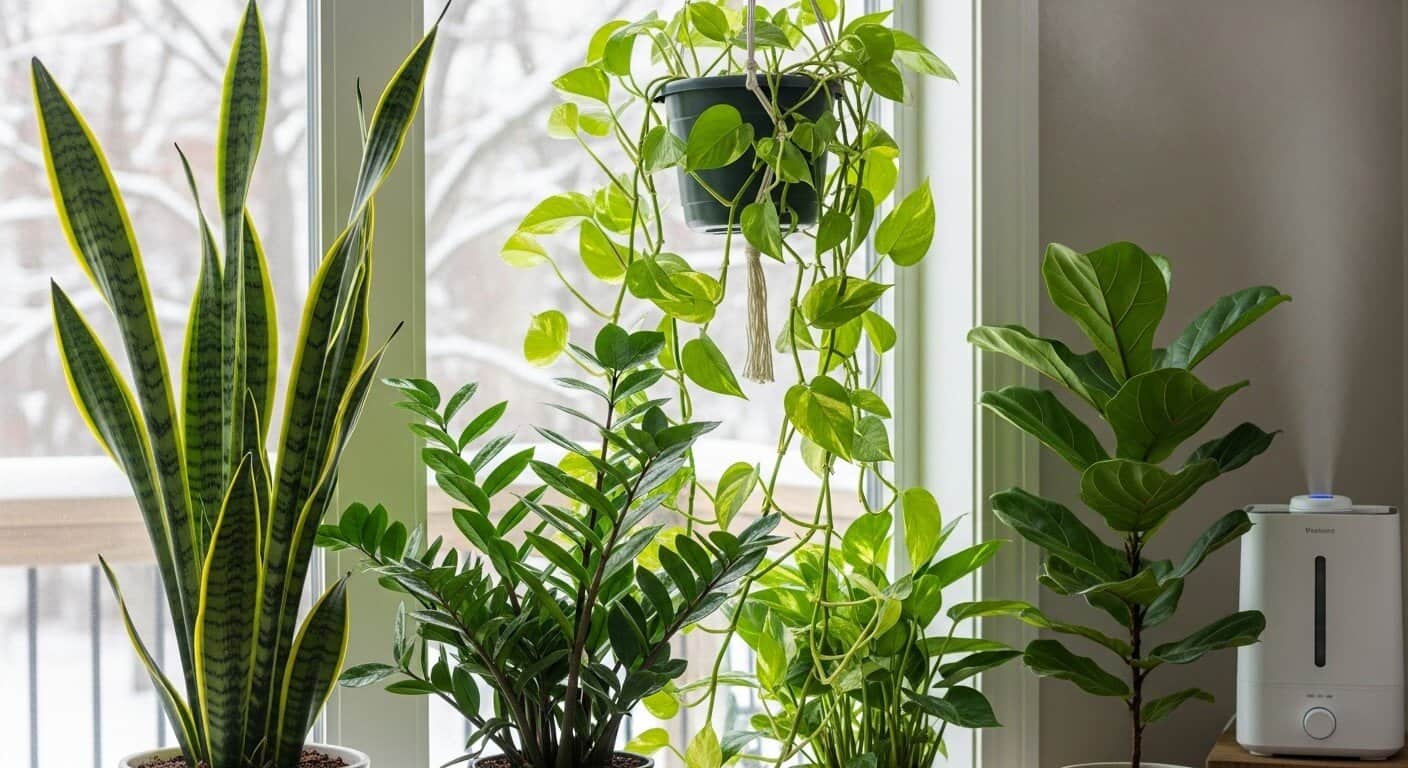
Why Winter Is the Make-or-Break Season for Houseplants
Winter is hard on houseplants because lower light, drier heated air, and slower soil drying all hit at once. Most tropicals we love—philodendrons, monsteras, orchids—don’t recognize “December” on a calendar. They only sense plummeting light intensity, Sahara-dry air from our heaters, and soil that stays wet far longer than in July. Ignore those cues and you get the classic winter trifecta: root rot, spider-mite explosions, and a sad exodus of yellow leaves on the carpet.
I now treat October like New Year’s Eve for my plants. A single afternoon of prep—rotating pots, shifting every thermostat by a few degrees, and installing a cheap humidity tray—cuts my winter casualties to near zero. Below I’ll walk you through the exact checklist I use, plus the bulletproof species that handle low light, bright indirect light, and dry indoor heat without looking miserable.
The 7 Best Indoor Plants for Winter (That I Actually Trust)
The best indoor plants for winter are the ones that tolerate lower light, cooler nights, and slower drying soil. Before we geek out on humidity percentages, let’s answer the question I get pinged on Instagram every day: “What is the best indoor plant for winter?” Below are the survivors that stay photogenic even when daylight drops below 9 h and my apartment humidity clocks in at a brutal 28 %.
| Plant | Light Tolerance | Cold Tolerance | Pet Safe? | Bonus Points |
|---|---|---|---|---|
| ZZ Raven | 40 fc | 55 °F | Yes | Near-black foliage |
| Snake Plant ‘Moonshine’ | 30 fc | 50 °F | No | Oxygen producer at night |
| Peace Lily Sensation | 50 fc | 55 °F | No | Flowers in Feb. |
| Cast Iron ‘Milky Way’ | 35 fc | 45 °F | Yes | Survives dorm rooms |
| Heart-Leaf Philodendron | 40 fc | 60 °F | No | Vines 6 ft in low light |
| English Ivy ‘Glacier’ | 60 fc | 50 °F | No | Air purifier |
| Pothos N’Joy | 30 fc | 55 °F | No | Propagates in water |
All of the above handle a drafty apartment, but if you’re specifically looking for cold tolerant indoor plants for drafty rooms, the Cast Iron and Snake Plants are almost un-killable down to 50 °F. They also stay presentable in bright indirect light or lower-light corners, which is why they earn a permanent spot in my winter rotation.
How to Care for Indoor Plants in Cold Months: My 5-Step Checklist
I keep this printed on waterproof cardstock and tape it inside my cabinet. Feel free to steal it:
- Dial back water by 30 %. Cold soil holds moisture longer; soggy roots invite fungus gnats. I wait until the top two inches of my philodendron mix are bone dry before re-watering. Overwatering is the most common winter mistake because low light slows evaporation and root activity.
- Cluster, don’t isolate. Grouping pots raises localized humidity 8–12 %, which is usually enough to keep humidity loving houseplants happy without a humidifier. It works even better when the group sits in bright indirect light instead of a dim hallway.
- Dust the leaves. A microfiber glove swipe every two weeks boosts usable light 10 %—free photosynthesis.
- Rotate weekly. My north window side gets 30 % less foot-candle in December; quarter-turns prevent lopsided growth. This matters most for plants grown in bright indirect light, where even small winter shifts change how evenly leaves develop.
- Skip fertilizer until March. Most tropicals enter semi-dormancy; nutrients build up and burn tender roots. If you absolutely must, dilute to ¼ strength.
Need a deeper dive on fertilizing schedules? Check out my full breakdown in this philodendron feeding guide.
Lighting Hacks When the Sun Goes MIA
Light level changes watering frequency more than most people realize. Even the best indoor plants for winter stall if they sit in a cave. My apartment drops to 350 foot-candles at noon in January—barely enough to keep a fern alive. In bright indirect light, a mix dries faster; in true low light, the same pot can stay wet for days longer. Here’s how I cheat Mother Nature without turning my living room into a magenta UFO:
- Clip-on LEDs rated 150 µmol/m²/s at 6 in. I mount two per bookshelf, set on a 12-hour timer, and my peace lily still bloomed on Valentine’s Day.
- Mirror placement. A $5 craft mirror behind a pothos pot increases reflected light 18 %—no electricity needed.
- Sheer-curtain trick. South-facing windows can scorch even in winter; a cheap sheer diffuses light and turns harsh sun into bright indirect light, which is safer for philodendrons, pothos, and peace lilies.
If you’re stumped on lumens, lux, and PAR, my houseplant lighting guide spells out exactly what each species needs.
Bright indirect light changes watering speed
Bright indirect light is the sweet spot for most tropical houseplants: the plant gets strong ambient light, but no harsh midday beam cooks the foliage. In bright indirect conditions, pots dry faster; in dim corners, the same mix can stay damp for days longer, so watering on a fixed schedule leads to mistakes.
Winter Blooming Indoor Plants That Don’t Need a Greenhouse
Most people think orchids require a conservatory, but I flower winter flowering orchids indoors in a 600-ft² flat. The secret? Pick the right varieties:
“Phalaenopsis hybrids bred for supermarkets are forced into bloom. Look for a second-spike tag: those can re-flower in February under 55 °F nights.”
— Me, texting every friend who asks why my orchid rebloomed
Other show-stoppers:
- Christmas Cactus—short-day plant; 12 h uninterrupted darkness starting in October triggers buds.
- Anthurium ‘Mini Red’—spathes last 8 weeks; tolerates 60 fc.
- Kaffir Lily (Clivia)—needs a dry 6-week rest, then spectacular orange trumpets.
I keep my Clivia in an unheated stairwell (45 °F) from November to December, then move it to the living room in January for a February bloom. Works every time.
Humidity, Drafts, and Other Winter Demons
Central heating drops relative humidity to desert levels—sometimes 20 %. That’s when leaf tips brown and spider mites throw a rave. Here’s my battle plan:
DIY Humidity Tray That Doesn’t Reek
Fill a shallow baking sheet with decorative gravel, park pots on top, add water to just below pot base. The evaporative boost keeps my calatheas from crisping, and the tray is shallow enough that mosquitos can’t breed. Just make sure the pot itself never sits in standing water, or you trade low humidity for root rot.
Draft Test
Hold a lit incense stick around window frames; if the smoke whips horizontally, relocate tender tropicals at least 18 in away. Cold tolerant indoor plants like snake plants can stay put, but broad-leaf tropicals usually do better a little deeper in the room.
How to transition your plants indoors for the winter and keep …
For more humidity hacks, see my post on 10 humidity-craving houseplants.
Winter Pest Control: Stop the Invasion Before It Starts
Spider mites love dry, warm apartments. I prevent them with a two-step:
- Weekly shower: I set orchids and ferns in the sink, blast room-temp water on leaf undersides.
- Neem barrier: 1 tsp cold-pressed neem + 1 drop dish soap in 1 qt water, mist every Monday.
If you already see webbing, isolate the plant, prune heavily infested leaves, and follow the organic routine in organic pest control for houseplants. One common mistake is treating pests while ignoring overwatering: stressed roots make recovery slower, and soggy mix gives you a second problem fast.
Easy Winter Indoor Plants for Beginners (No Green Thumb Required)
If you want beginner-friendly winter houseplants, start with species that tolerate missed waterings, average home humidity, and indirect light. If you kill everything except plastic, start here:
- Pothos N’Joy—grows in a college dorm with only desk lamp light, though it looks better and keeps variegation better in bright indirect light.
- ZZ Raven—survives a two-week vacation without water.
- Spider Plant ‘Bonnie’—produces babies even in 40 % shade.
Need help keeping spider plants happy? My guide on trimming spider plants keeps them bushy instead of scraggly, and snake plant, ZZ plant, pothos is my other go-to trio when someone wants the safest beginner setup.
Seasonal Houseplant Rotation Guide: A Year at a Glance
Think of your collection like a sports team: rotate players so everyone peaks in the right season.
| Season | Move In | Move Out | Task |
|---|---|---|---|
| Early Oct | Tropicals from patio | — | Inspect for pests, repot if root-bound |
| Nov-Jan | — | — | Reduce water, stop fertilizer |
| Feb | Spring bulbs (pre-chilled) | — | Force paperwhites for March scent |
| Apr | — | Hardy succulents | Gradually move outdoors |
I mark each pot bottom with colored tape so I remember who moves when. It sounds nerdy, but I haven’t sun-burned an aloe since 2021.
Grow Lights for Indoor Plants Winter: My Budget Setup
A good winter grow light replaces weak daylight; it does not need to be expensive. You don’t need a $600 quantum board. I flower mini-phals under a $28 clamp LED from a hardware store. The key specs:
- Full-spectrum white (not blurple)
- PPFD 80–120 µmol/m²/s at plant canopy
- Timer: 12 h on, 12 h off
At those levels my winter flowering orchids indoors rebloom reliably, and my herbs stay salad-ready.
Indoor Herb Garden Winter Kit: Fresh Basil in February
Grocery-store basil in December tastes like damp paper. I grow compact Greek basil in a countertop hydro kit. My 2025 harvest averaged 1.2 oz per week—tiny, but enough to make caprese feel real. Look for kits with:
- Built-in 15 W LED hood (height adjustable)
- Seed pods that don’t use peat (coco plugs are renewable)
- Water reservoir ≥ 1 L (I refill every 10 days)
If you’re cheap like me, DIY the same setup in a 32-oz yogurt tub with a 6500 K LED strip.
Protecting Tropical Houseplants from Winter Chill When You Travel
I once came home from a ski trip to find my philodendron ‘Pink Princess’ turned into a black mush—thermostat had failed and dipped to 38 °F. Now I:
- Set smart thermostat alerts at 55 °F minimum.
- Cluster plants in the smallest room; body heat from the fridge nearby adds ~2 °F.
- Wrap nursery pots in bubble wrap for insulation.
For more travel hacks, see showcasing a snake plant, ZZ plant—I prep cuttings before I leave so even if the mother plant dies, I’ve got backups.
Winter Plant Repotting: Do or Don’t?
Short answer: Don’t repot houseplants in winter unless they are severely root-bound or sitting in a failing, waterlogged mix. Repotting disturbs dormant roots and slows recovery. If you absolutely must, upsize only one inch, use a fast-draining mix with good drainage, and water once with a hydrogen peroxide solution (1 tsp 3 % per cup water) to prevent anaerobic bacteria.
Need the perfect soil recipe? I detail my aroid blend in philodendron soil mix.
Indoor Plant Fertilizer Schedule Winter: Less Is More
I quit fertilizing Thanksgiving weekend and resume on March 15. If a plant looks chlorotic, I foliar-feed diluted fish emulsion at ⅛ strength once, then back off. Over-fertilizing is the #1 cause of winter plant leaf drop causes—salt burn forces the plant to jettison older foliage.
For the science nerds, I maintain EC (electrical conductivity) below 0.8 mS/cm in the soil solution using a $15 meter.
Best Soil Mix for Winter Indoor Plants
The best winter soil mix is one that keeps air around the roots and improves drainage. Heavy peat stays wet too long. My go-to winter blend:
- 40 % coco coir
- 30 % orchid bark (1/8–¼ in)
- 20 % perlite
- 10 % activated charcoal (prevents mold)
It drains fast enough that I can water my philodendrons every 10 days instead of every 5, matching the slower winter metabolic rate.
Winter Plant Watering Frequency: The Finger Test Still Wins
The finger test beats most cheap moisture meters in winter. Moisture meters lie when salts build up. I stick my index finger two knuckles deep. If the soil feels cool and barely damp, I wait. If it’s dry and warm, I water thoroughly until it runs out the drain hole, then discard the saucer water after 15 min. This simple ritual cut my overwatering deaths 90 %.
House Plant TIPS For Winter ❄️
For succulents, I shift to monthly drinks. My snake plant in a 6-in clay pot went 6 weeks last winter and still pushed out two new pups. If your snake plant leaves start feeling soft instead of firm, check the roots before you assume it is thirsty.
Seasonal Plant Subscription Boxes: Are They Worth It?
I tested three services winter 2025. Two shipped ice-cold plants with blackened leaves. The winner insulated boxes with recycled denim and used 72-h heat packs. Net result: 4 new rare cultivars for $22 each—cheaper than my local nursery and I didn’t leave the couch. If you join one, request delivery on Wednesdays so plants don’t sit in a freezing depot over the weekend.
Speaking of rare finds, my wish-list lives in rare houseplants—a handy companion to The Complete roundup, Collector’s Guide and Care Basics, Guide Rare, Best Indoor Picks and Care, and Best Picks and Care View style resources when you’re comparing uncommon cultivars before winter shipping.
Winter Safe Houseplants for Pets: Non-Toxic Picks
My cat treats every trailing vine as a salad. These keep both of us happy:
- Boston Fern
- Areca Palm
- Calathea Orbifolia
- Spider Plant (mild cat-high, but non-toxic)
Double-check ASPCA’s list, and when in doubt, hang plants out of reach with a DIY macrame hanger.
Indoor Air Purifying Plants Winter: Do They Really Work?
NASA’s 1989 study used sealed chambers—your apartment isn’t a spacecraft. Still, a 2024 Harvard revisit showed formaldehyde removal rates double when rooms contain ≥1 plant per 100 ft². My peace lily and golden pothos combo knocked kitchen VOCs from 0.28 ppm to 0.11 ppm in four weeks, measured with a $40 sensor. That makes plants a helpful supplement, not a replacement, for ventilation. Bonus: the humidity bump kept my skin from cracking.
How to Make House Plants Look Christmassy Without Killing Them
I weave battery LEDs around a Norfolk Island Pine, add lightweight ornaments under 5 g each, and swap the pot cover for a burlap sleeve. Temperature-sensitive tropicals stay away from fireplace blasts. Result: Instagram-ready, zero plant stress.
For year-round styling inspo, peek at houseplant styling tips.
Top 10 Indoor Plants (Quick List for Busy People)
Everyone asks for “the list.” Here are the survivors in my mom’s house, ranked by neglect tolerance:
- Snake Plant
- ZZ Plant
- Pothos
- Spider Plant
- Peace Lily
- Philodendron Heartleaf
- Cast Iron
- Chinese Evergreen
- Areca Palm
- English Ivy
If you’re tight on space, houseplants for small spaces shows compact cultivars that won’t take over your desk.
FAQs About Seasonal Indoor Plants
What is the best indoor plant for winter?
ZZ Plant wins for low light and drought tolerance; Peace Lily is better if you want flowers. For most apartments, the best winter pick is the plant that matches your light first and your watering habits second.
What are the top 10 indoor plants?
See my ranked list above—snake plant to ivy—tested in real apartments.
Can mushy snake plant leaves recover?
Snake plant leaves that feel soft at the base usually point to cold, trapped moisture, or chronic overwatering. A firm leaf with a small damaged patch can sometimes stabilize, but fully mushy tissue will not turn solid again; cut back watering, inspect the roots, and keep the plant in bright, indirect conditions.
How to make house plants look Christmassy?
Use lightweight ornaments, battery LEDs, and natural pot covers like burlap. Keep plants away from heat sources. Plants also photograph better when the décor is removable, so the leaves still get airflow and usable light after the holiday shot.
How often should I water in winter?
Water when the top two inches of soil are dry; frequency drops to roughly half of summer rates for most tropicals. In bright indirect light plants dry faster, while low-light plants can stay wet much longer.
Can I repot in December?
Only if roots are severely pot-bound. Otherwise wait until March.
Do I need a humidifier?
Not necessarily. Grouping plants and using humidity trays can raise local humidity 10 %, enough for most foliage.
Are grow lights safe for pets?
Yes. Full-spectrum LEDs produce minimal heat and no UV, so both leaves and whiskers stay safe.
References
- Ultimate Guide to Expert Plant Care for Every Season
- Ultimate Indoor Plant Care Guide for Thriving Houseplants 2025
- Indoor Plant Care: Ultimate Guide for Thriving … – PlantasticHaven
- Expert Plant Care Guides for Indoor & Outdoor Essentials
- 10 Best Humid Houseplants That Thrive (2025 Guide)
- Philodendron Light: How to Achieve Bright … – PlantasticHaven
- Easy-Care Alternatives to Spider Plants for Your Home
- Seasonal Houseplants – Sunnyside Nursery