
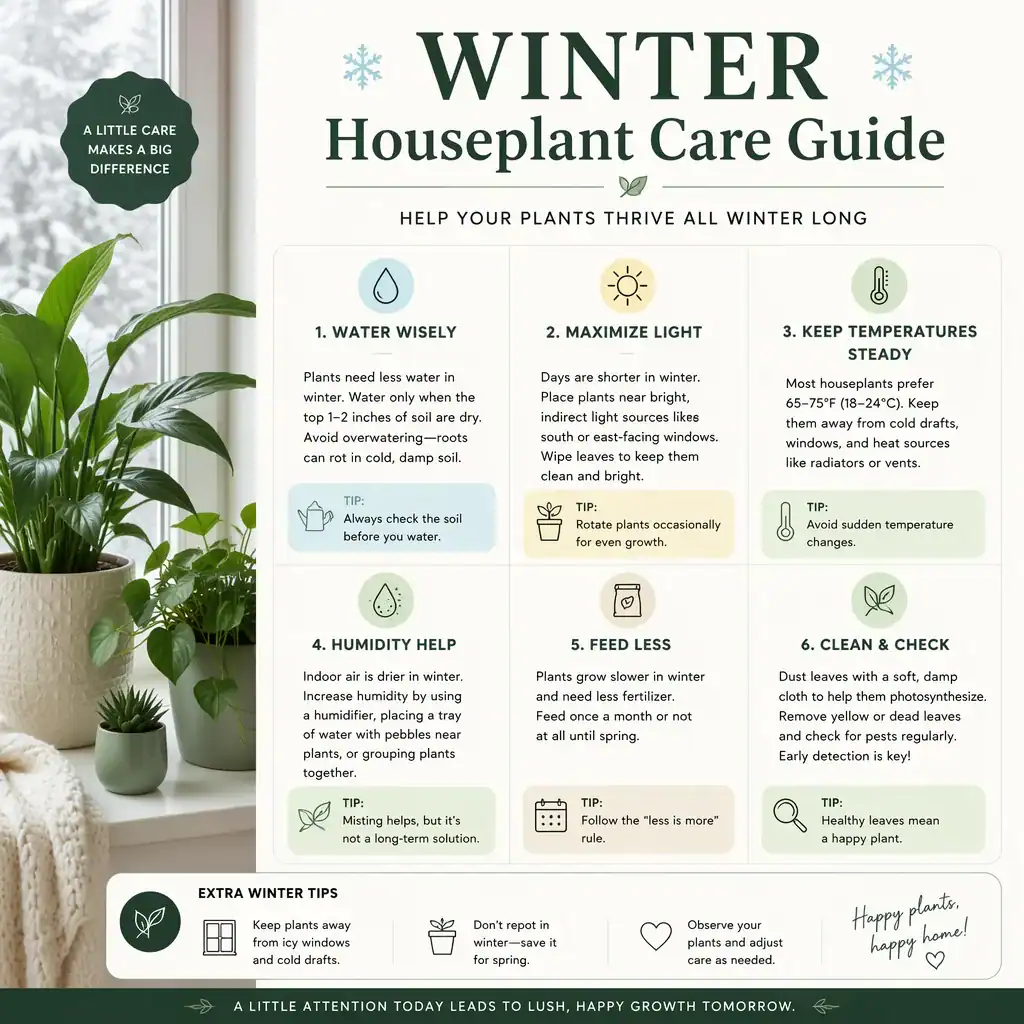
Winter houseplant care means giving most indoor plants less water, more bright indirect light, and steadier conditions. This guide shows how to adjust watering, light, humidity, and placement so houseplants stay stable through shorter days, dry heated air, and colder indoor conditions instead of slowly declining until spring.
Quick answer
In winter, most houseplants need less water, more intentional light, better humidity management, and fewer disruptive care changes. The safest approach is to water by dryness, maximize usable light, protect plants from cold drafts and hot vents, and avoid overfeeding when growth naturally slows.
- Biggest winter mistake: overwatering in lower light
- Most useful adjustment: move plants closer to bright windows or add a grow light
- Most overlooked issue: dry heated air plus cold drafts
- Best mindset: make small seasonal adjustments instead of panic-correcting every symptom
Why houseplants struggle in winter
Winter stress is usually not caused by one dramatic problem. It is the compound effect of shorter days, weaker light, slower growth, colder glass, hot dry heating systems, and watering routines that no longer match how slowly the plant is using moisture.
| Winter change | What it does to plants | Best response |
|---|---|---|
| Lower light | Slower growth and slower water use | Water less and move plants into brighter positions |
| Dry heated air | Brown edges, curl, stalled new growth on humidity-sensitive plants | Raise humidity where the plant type actually benefits |
| Cold windows and drafts | Leaf drop, shock, cold injury | Protect plants from glass chill and entry drafts |
| Shorter days | Less energy for recovery and growth | Avoid unnecessary repotting or heavy fertilizing |
Rule 1: Water less, but do not let care become lazy
Most indoor plants need less frequent watering in winter because they are growing more slowly and the root zone stays moist longer. That does not mean a fixed “water every two weeks” rule is safe. It means you should check the potting mix before every watering and let seasonal conditions guide you.
Safer winter watering workflow
- Check the top layer of the soil before watering.
- If the mix still feels moist, wait.
- If it has dried to the depth your plant type prefers, water thoroughly.
- Let excess water drain fully and do not leave roots sitting in runoff.
- Recheck faster after a warm, bright week and slower after cold, dim weather.
- Tropical foliage plants: usually need longer gaps between waterings than in summer
- Succulents and cacti: often need significantly less water
- Moisture-loving plants: still need attention, but not soggy roots
For a better year-round watering framework, see how to water houseplants correctly.
Rule 2: Maximize usable light
Winter light is weaker, shorter, and often blocked further by distance from the window. One of the fastest quality-of-life improvements for winter plant care is moving plants closer to a bright window and making sure leaves and glass are clean enough to capture what light is available.
- move light-loving plants closer to bright windows
- watch for cold glass contact on sensitive foliage
- clean windows and dusty leaves to improve light use
- rotate plants if growth starts leaning hard to one side
- use supplemental grow lights when natural light is clearly not enough

For a more detailed light baseline, see the houseplant lighting guide and plant light requirements.
Rule 3: Control temperature and drafts
Temperature stress in winter is often about swings, not just cold. A plant near icy glass at night and a hot vent by day can decline even when the room looks comfortable to you.
Most common houseplants prefer stable indoor temperatures. They do not enjoy being pressed against icy windows at night or blasted by hot dry vents during the day.
- keep plants away from cold drafts near doors and windows
- avoid direct heat from radiators, fireplaces, and forced-air vents
- watch leaf contact with very cold window glass
- do not move plants constantly between hot and cold spots
Rule 4: Raise humidity only where it matters
Not every houseplant needs tropical humidity, but many foliage plants suffer when heated indoor air gets extremely dry. Focus on the plants that visibly benefit rather than trying to turn the whole home into a greenhouse.
Good humidity upgrades
- group compatible plants together
- use a room humidifier when the air is very dry
- keep plants away from direct heat blasts
- treat pebble trays as a minor helper, not a miracle solution
If your space is dry year-round, also review houseplants for dry environments.
Rule 5: Fertilize less aggressively
Winter is usually not the moment to push growth hard. Many houseplants either slow down significantly or pause active growth. If the plant is not growing much, feeding heavily often adds more stress than benefit.
- reduce or pause fertilizer for slow-growing plants
- resume stronger feeding when active spring growth returns
- never use fertilizer to solve a light problem
Rule 6: Watch for winter pests and hidden stress
Dry indoor conditions can make spider mites and other pests more likely on stressed plants. Winter also makes weak care habits show up faster because plants recover more slowly, especially after overwatering, sudden moves, or long periods in low light.
- inspect leaf undersides and stems regularly
- remove dead growth before it becomes clutter
- act early on pests instead of waiting for a full infestation
If you see warning signs, use organic pest control for houseplants and the broader houseplant pest control guide.
What not to do in winter
- do not repot plants casually unless there is a real need
- do not drown plants because the leaves look slightly droopy once
- do not assume every yellow leaf is thirst
- do not move a plant into a dark corner and expect it to stay healthy
- do not chase every symptom with fertilizer
- do not ignore a pot that stays wet too long or develops a sour smell
Winter houseplant care checklist
Use this winter houseplant checklist once a week. It catches the three problems that cause most cold-season decline: low light, wet soil that stays wet too long, and dry drafty placement.
- check soil before watering
- move high-light plants closer to bright windows
- protect leaves from cold glass and hot vents
- raise humidity where sensitive plants need it
- inspect for pests weekly
- reduce fertilizer unless clear active growth continues
Helpful resources
FAQ
How often should you water houseplants in winter?
Usually less often than in summer, but not on a fixed calendar. Check the potting mix first and water based on actual dryness, because low light and cooler rooms can keep a pot wet much longer.
Should houseplants be fertilized in winter?
Usually less, or not at all for slower-growing plants. Winter is often a maintenance season rather than a growth-push season.
Do houseplants need grow lights in winter?
Some do, especially if natural light is weak and the plant is stretching, fading, or stalling. A grow light is most useful when window light is clearly not enough.
Why do houseplants struggle more in winter?
Because lower light, dry heated air, colder drafts, and slower growth make watering and recovery harder to manage.